Blog
GHK-CU Copper Peptide Powder: Oral vs Injection, Hair Applications, Microneedling, and Research Overview
Jul
GHK-CU Copper Peptide Powder: A Research Overview
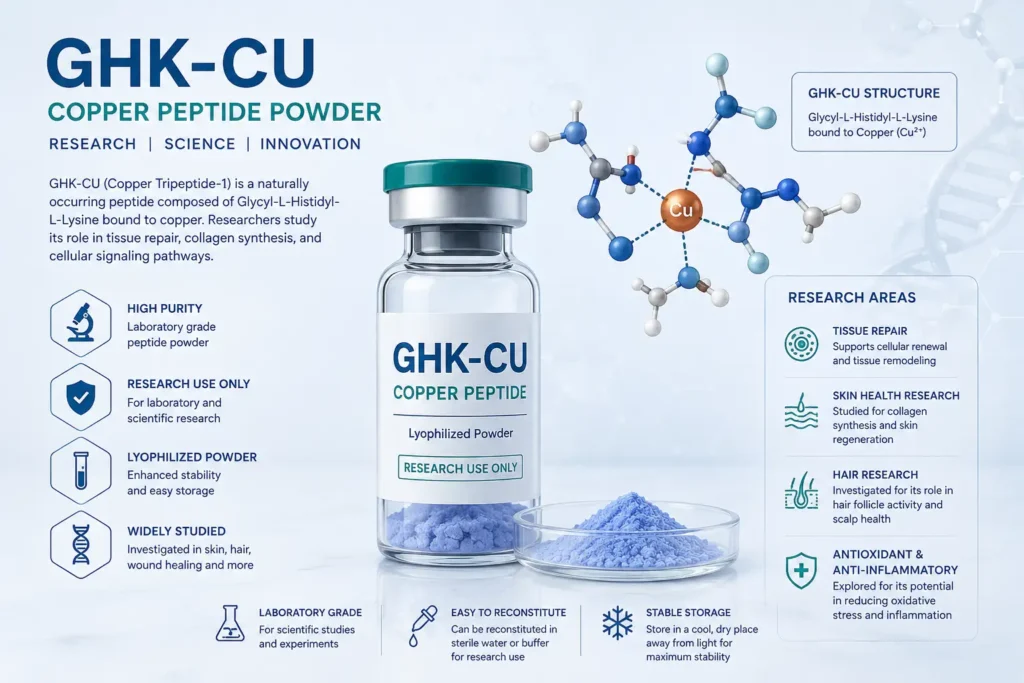
GHK-CU copper peptide is a laboratory-grade form of the naturally occurring copper peptide complex known as glycyl-L-histidyl-L-lysine copper. Since its discovery, researchers have investigated GHK-CU because of its involvement in tissue repair, extracellular matrix regulation, and cellular signaling.
Today, GHK-CU is available in several research formulations, including lyophilized powder, injectable preparations, topical products, and experimental oral formulations. Each form has different characteristics, making it important to understand how they differ before reviewing published research.
What Is GHK-CU Copper Peptide?
GHK-CU is a naturally occurring tripeptide that binds with copper ions to form a biologically active complex. Small amounts are naturally present within the human body, although concentrations tend to decline with age.
Researchers have studied GHK-CU for its potential involvement in:
- Cellular communication
- Tissue remodeling
- Collagen production
- Extracellular matrix regulation
- Wound healing biology
- Skin and hair follicle research
The peptide continues to be investigated in laboratory settings to better understand how it influences these biological pathways.
What Is GHK-CU Copper Peptide Powder?
GHK-CU copper peptide powder typically refers to a lyophilized preparation intended for laboratory research.
Lyophilization removes moisture while helping preserve peptide stability during storage. Before laboratory use, researchers commonly reconstitute the powder using an appropriate sterile solution according to established research protocols.
The powder form allows investigators to prepare solutions suitable for specific experimental requirements while maintaining accurate concentrations.
GHK-CU Peptide Oral vs Injection
One of the most common questions involves comparing oral and injectable forms of GHK-CU.
Oral Formulations
Researchers continue investigating whether oral delivery can provide meaningful systemic absorption. Like many peptides, GHK-CU may be affected by digestive enzymes before reaching circulation, making oral bioavailability an active area of research.
Experimental approaches include:
- Tablets
- Capsules
- Specialized delivery technologies
Current evidence remains limited, and further studies are needed to determine how effectively oral formulations deliver intact peptide.
Injectable Formulations
Injectable GHK-CU bypasses the digestive system and delivers the peptide directly into the body through research administration methods.
Because this route avoids gastrointestinal breakdown, investigators often select injectable preparations when studying systemic biological effects under controlled laboratory conditions.
However, injectable preparations should only be handled within appropriate research environments and are not interchangeable with topical or oral products.
GHK-CU Injectable Peptide
GHK-CU injectable peptide has been examined in preclinical and experimental studies focused on regenerative biology.
Areas of investigation include:
- Connective tissue remodeling
- Cellular repair pathways
- Collagen regulation
- Anti-inflammatory signaling
- Recovery following tissue injury
Although these findings have generated scientific interest, research continues to evaluate safety, pharmacokinetics, and long-term biological effects.
GHK-CU Copper Peptide Tablets
Interest in GHK-CU copper peptide tablets has increased as researchers explore more convenient delivery methods.
Experimental tablet formulations aim to improve peptide stability while investigating whether sufficient absorption can occur after oral administration.
Current published evidence remains far more extensive for topical and laboratory injectable research than for oral tablets. As a result, oral GHK-CU continues to represent an emerging area of investigation rather than an established delivery method.
How to Use GHK-CU
The way GHK-CU is used depends entirely on the formulation being studied.
For laboratory research:
- Lyophilized powder is typically reconstituted before experimental use.
- Injectable formulations are evaluated using controlled research protocols.
- Topical preparations are investigated for localized skin and scalp applications.
- Oral formulations continue to undergo research regarding absorption and stability.
Research methods vary significantly between studies, making standardized laboratory protocols essential for reliable results.
GHK-CU Serum for Microneedling
Microneedling GHK-CU has become an active area of cosmetic and dermatological research.
Microneedling creates controlled microchannels within the skin. Researchers investigate whether these temporary pathways may improve delivery of topical compounds, including copper peptides.
Experimental studies have explored whether combining GHK-CU serum with microneedling may influence:
- Skin remodeling
- Collagen production
- Elasticity
- Recovery after cosmetic procedures
- Overall skin appearance
Although early findings are promising, treatment methods differ considerably between studies, and additional clinical research is still needed.
Microneedling GHK-CU
When researchers evaluate microneedling GHK-CU combinations, they often compare outcomes against topical application alone.
Areas commonly measured include:
- Skin texture
- Fine lines
- Elasticity
- Hydration
- Recovery time
- Collagen biomarkers
Results vary depending on treatment intervals, needle depth, formulation, and participant characteristics.
GHK-CU and Hair Research
Interest in GHK-CU copper peptide hair research continues to grow because healthy hair follicles rely on complex biological signaling.
Researchers have investigated whether GHK-CU may influence:
- Hair follicle activity
- Scalp environment
- Cellular repair
- Blood vessel formation
- Hair growth cycle regulation
While laboratory and early clinical studies have reported encouraging findings, larger human studies are necessary before drawing definitive conclusions regarding effectiveness.
GHK-CU and Rosacea Research
GHK-CU rosacea research focuses primarily on the peptide’s potential role in skin barrier function and inflammatory signaling.
Researchers are studying whether topical copper peptides may support:
- Skin barrier integrity
- Recovery following irritation
- Connective tissue remodeling
- Balanced inflammatory responses
Rosacea is a complex inflammatory skin condition with multiple contributing factors. Current evidence does not establish GHK-CU as a standard treatment, and further clinical studies are needed to determine its role in rosacea management.
Frequently Asked Questions
What is GHK-CU copper peptide powder?
GHK-CU copper peptide powder is a lyophilized form of the naturally occurring copper peptide complex used primarily in laboratory and scientific research.
Is oral GHK-CU the same as injectable GHK-CU?
No. Oral formulations must pass through the digestive system, whereas injectable preparations bypass digestion. Researchers continue studying differences in absorption and biological activity.
Can GHK-CU be used with microneedling?
Research has investigated combining GHK-CU serum with microneedling to evaluate collagen production, skin remodeling, and recovery. Clinical evidence is still developing.
Is GHK-CU studied for hair health?
Yes. Researchers continue investigating GHK-CU for its potential effects on hair follicles, scalp biology, and tissue regeneration.
Is GHK-CU used to treat rosacea?
Current evidence does not support GHK-CU as an established treatment for rosacea. Research is ongoing to better understand its effects on skin inflammation and barrier function.
Conclusion
GHK-CU copper peptide powder remains an important subject of scientific investigation because of its involvement in tissue remodeling, cellular communication, and regenerative biology. Research continues across multiple delivery methods, including topical products, injectable preparations, oral formulations, and laboratory-grade powder.
