Custom Peptides
Gip Peptide has years of expertise
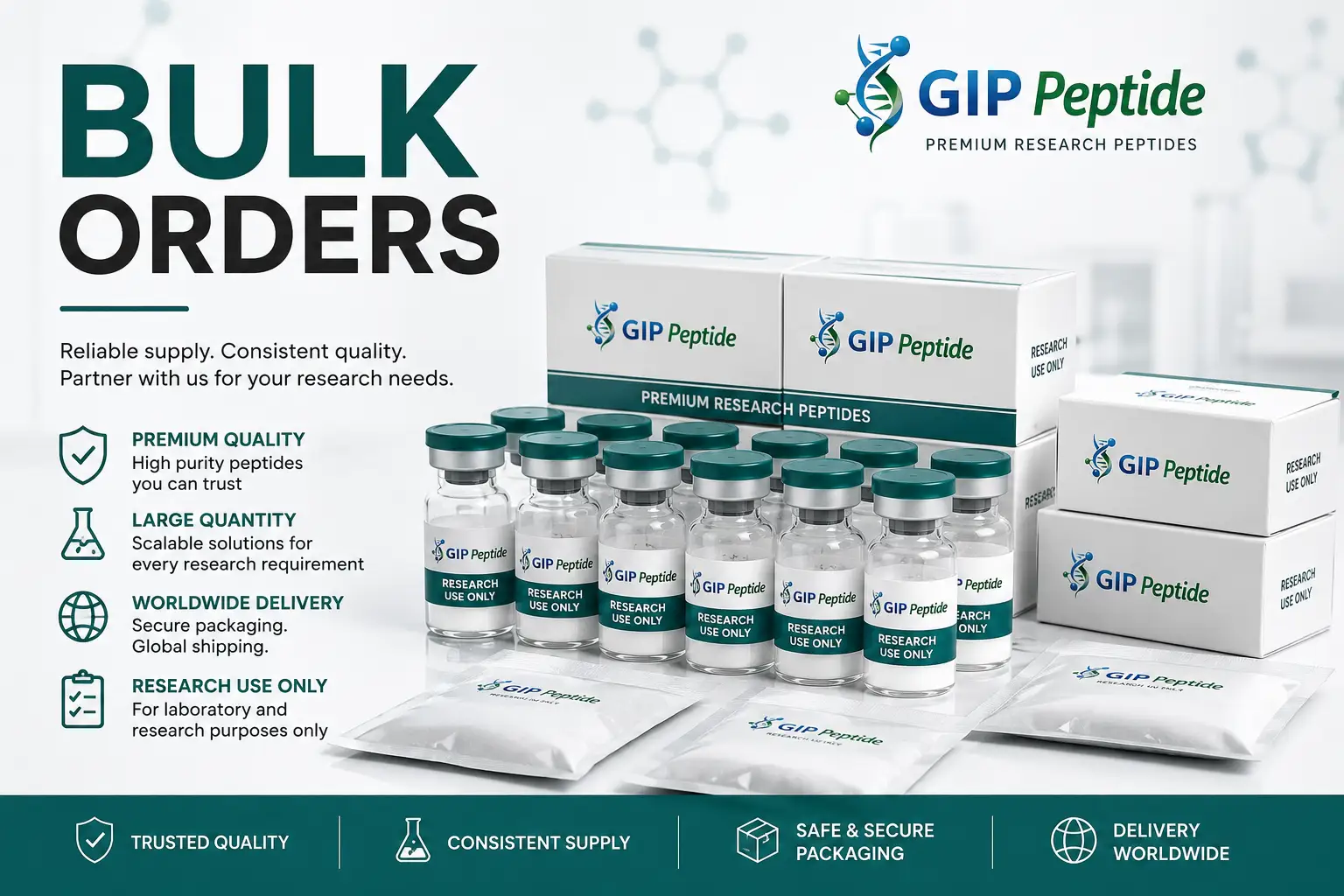
Quotes for larger research product orders
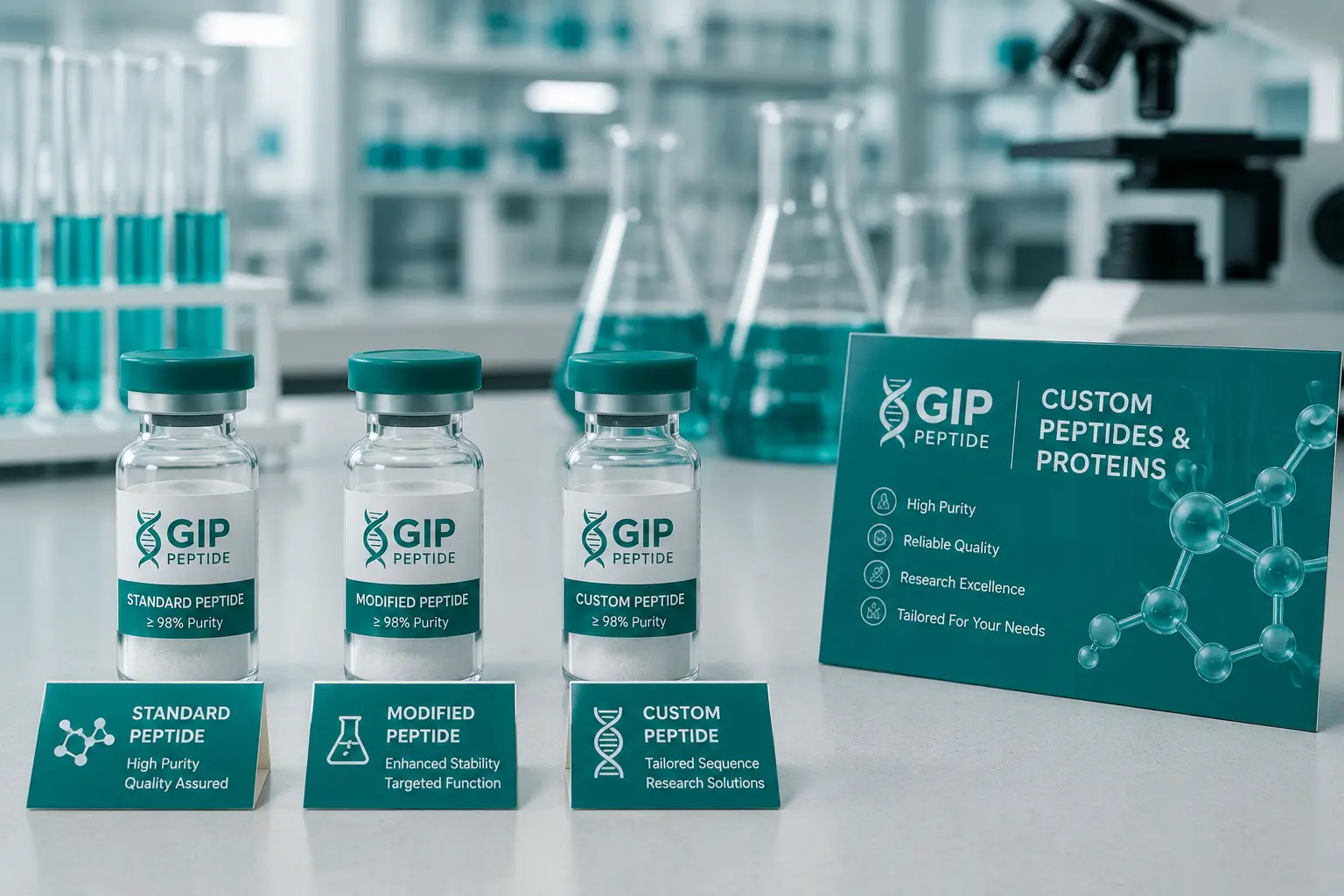
Custom Peptides
Gip Peptide has years of expertise
Answers to common questions about ordering, shipping, product documentation, accounts, and support.
Browse Best Sellers or All Peptides, add items to cart, and complete checkout from your account. For repeat orders, sign in to reorder from order history.
Most orders ship after payment and documentation review. Tracking details are attached to the order as soon as fulfillment creates the shipment.
Product pages focus on catalog details, batch documentation, COA references, storage notes, and research-use positioning so buyers can compare items clearly.
For availability, documentation, shipping, or account questions, include the product name, catalog code, order number, and destination country when contacting support.
There is no single amount of peptide that is considered ideal for skin. In skincare products, peptide concentrations vary depending on the formulation and the purpose of the product. Rather than focusing on the percentage, it is more important to choose a well-formulated product from a trusted manufacturer and use it consistently according to the directions. If you have sensitive skin or a specific skin condition, consider consulting a dermatologist before adding a new product to your routine.
The length of time peptides remain in the body depends on the specific peptide, how it is administered, and how quickly the body breaks it down. Some peptides are cleared within minutes or hours, while others are designed to last longer. Because every peptide is different, there is no single answer that applies to all peptide products.
There is no scientific evidence that peptides can increase height in healthy adults. Adult height is largely determined by genetics and natural growth during childhood and adolescence. Some peptides are being studied for medical purposes, but they should not be viewed as a method for increasing height.
A peptide is made up of two or more amino acids linked together by peptide bonds. Amino acids are often called the building blocks of proteins. When several amino acids join in a chain, they form a peptide, and longer chains eventually become proteins.
Peptides can be used in several ways depending on their intended purpose. Some are applied directly to the skin in creams or serums, while others may be available as oral products or administered by injection under medical supervision. The appropriate method depends on the specific peptide and its intended use. Always follow the manufacturer’s instructions or the advice of a qualified healthcare professional.
Peptides are popular in skincare because they help support the skin’s natural processes. Certain peptides may encourage the production of proteins such as collagen and elastin, which contribute to firmer, smoother-looking skin. They can also help improve the appearance of fine lines and support the skin’s natural barrier when included in a well-formulated skincare routine.
Several peptides have been studied for their potential role in muscle development, but research is ongoing, and their effectiveness can vary. Some peptides are used only in research or under medical supervision. Anyone considering peptide use for muscle-related purposes should seek guidance from a qualified healthcare professional and ensure any product complies with local laws and regulations.
A peptide linkage, also known as a peptide bond, is formed when the amino group of one amino acid reacts with the carboxyl group of another amino acid. During this process, a molecule of water is released, creating a strong chemical bond that connects the amino acids into a peptide chain.
Peptide serums are suitable for many people who want to support healthier-looking skin or address common signs of aging, such as fine lines and reduced firmness. They are often included in skincare routines for adults seeking hydration and improved skin texture. Those with sensitive skin or existing skin conditions should perform a patch test or consult a skincare professional before regular use.
There is no single peptide that has been proven to be the best for both muscle growth and fat loss. Different peptides are being studied for different purposes, and research continues to evolve. Results can vary between individuals, and any use of peptides for performance or body composition should be discussed with a qualified healthcare professional.
Yes, peptides and vitamin C can often be used together in a skincare routine. Many people combine these ingredients because they offer different skin-supporting benefits. If you have sensitive skin, introduce new products gradually and follow the directions provided by the manufacturer. Using sunscreen during the day is also recommended when using active skincare ingredients.