Blog
Epithalon Peptide Guide: Benefits, Dosage Protocol, & Reconstitution
Jan
What Is Epithalon Peptide?
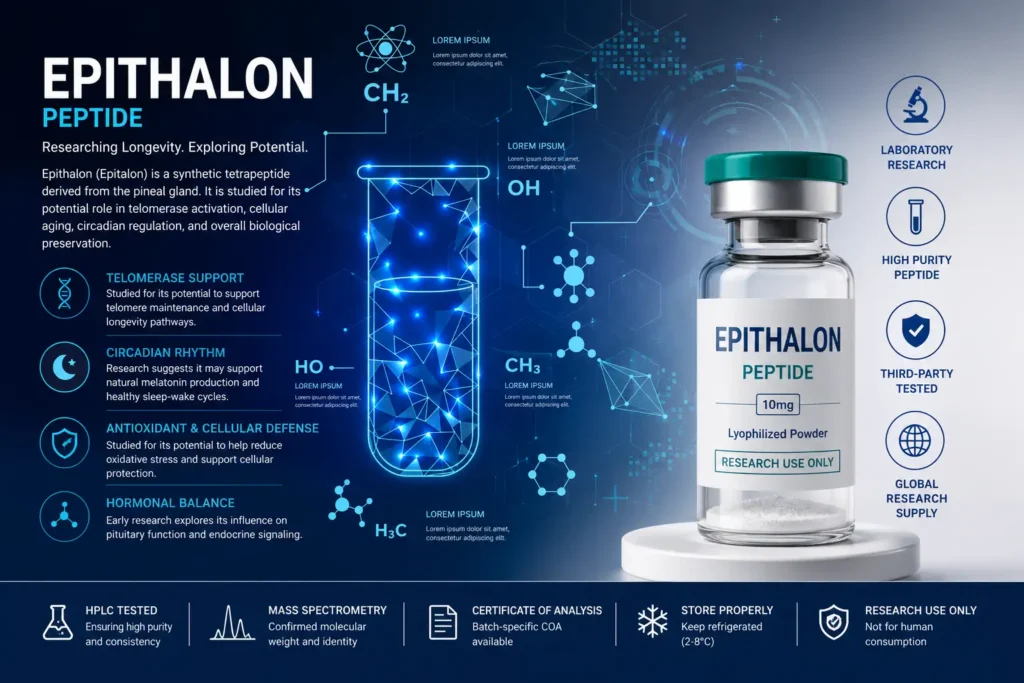
Epithalon (frequently spelled Epitalon) is a synthetic version of a short peptide originally isolated from the pineal gland. It belongs to a specialized family of peptide bioregulators studied for their potential role in cellular aging, circadian regulation, and biological preservation.
Researchers primarily focus on Epithalon due to its relationship with telomerase an enzyme responsible for maintaining and repairing the protective caps (telomeres) at the ends of chromosomes. Because telomere shortening is strongly linked to cellular aging, Epithalon remains one of the most widely discussed compounds in longevity science.
Note on Availability: Epithalon is supplied in several forms, including oral capsules and injectable vials. In most jurisdictions, it is classified as a research chemical rather than an FDA-approved medication for human treatment.
Tetra Peptide Structure Explained
Epithalon is classified as a tetra peptide because its molecular structure consists of four specific amino acids linked in a precise sequence:
Alanine → Glutamic Acid → Aspartic Acid → Glycine
Why Small Peptides Matter in Research
- High Chemical Stability: Short-chain peptides are generally easier to synthesize with consistent high purity.
- Predictable Bioactivity: Unlike large, complex growth factors with multi-layered 3D structures, tetra peptides demonstrate simpler, more predictable interaction mechanisms in laboratory models.
Epithalon Benefits Explored in Research
Most scientific interest in Epithalon stems from preliminary laboratory tests and early-stage studies across several core areas:
- Telomere Maintenance & Anti-Aging: Studies focus on Epithalon’s ability to stimulate telomerase activity, potentially preserving cellular replication capability.
- Circadian Rhythm & Sleep Support: Due to its origin in pineal gland research, Epithalon is studied for its potential influence on natural melatonin production and sleep-wake cycles.
- Antioxidant & Cellular Defense: Lab models indicate Epithalon may help reduce oxidative stress markers and mitigate cellular damage.
- Endocrine & Hormonal Balance: Early research examines how Epithalon influences pituitary gland function and downstream hormone signaling pathways.
Common Epithalon Protocol & Dosing Patterns
Unlike peptides used continuously for long periods, Epithalon protocols typically follow a cyclical pattern.
The Cyclical Approach
- Short-Term Cycles: Research protocols generally involve daily administration for a set period (e.g., 10 to 20 consecutive days).
- Extended Breaks: A cycle is typically followed by a multi-month break (often 3 to 6 months) before repeating.
- Biological Rhythms: This structure reflects the idea that pineal gland signaling operates in natural pulses rather than needing continuous stimulation.
Important Medical Disclaimer: There is no single universally approved human protocol. Because individual research goals, weight, and biological responses vary, always consult a qualified medical professional before considering peptide use.
How to Use an Epithalon Dosage Calculator
Because small peptides are administered in micro-quantities, calculating your dosage accurately is essential. An Epithalon dosage calculator helps you convert dry powder weight into a precise liquid injection volume.
The 3 Key Variables Needed:
- Total Peptide Amount: The total milligrams (mg) in your vial (e.g., 10 mg or 20 mg).
- Reconstitution Volume: The amount of Bacteriostatic Water added in milliliters (mL).
- Target Dose: Your intended dose expressed in micrograms (mcg) or milligrams (mg).
Calculation Example:
If you mix a 10 mg vial of Epithalon with 2 mL of bacteriostatic water:
- Concentration = 5 mg per mL (5,000 mcg/mL)
- A target dose of 500 mcg would equal 0.1 mL (10 units on a standard U-100 syringe).
Handling Epithalon Peptide Vials
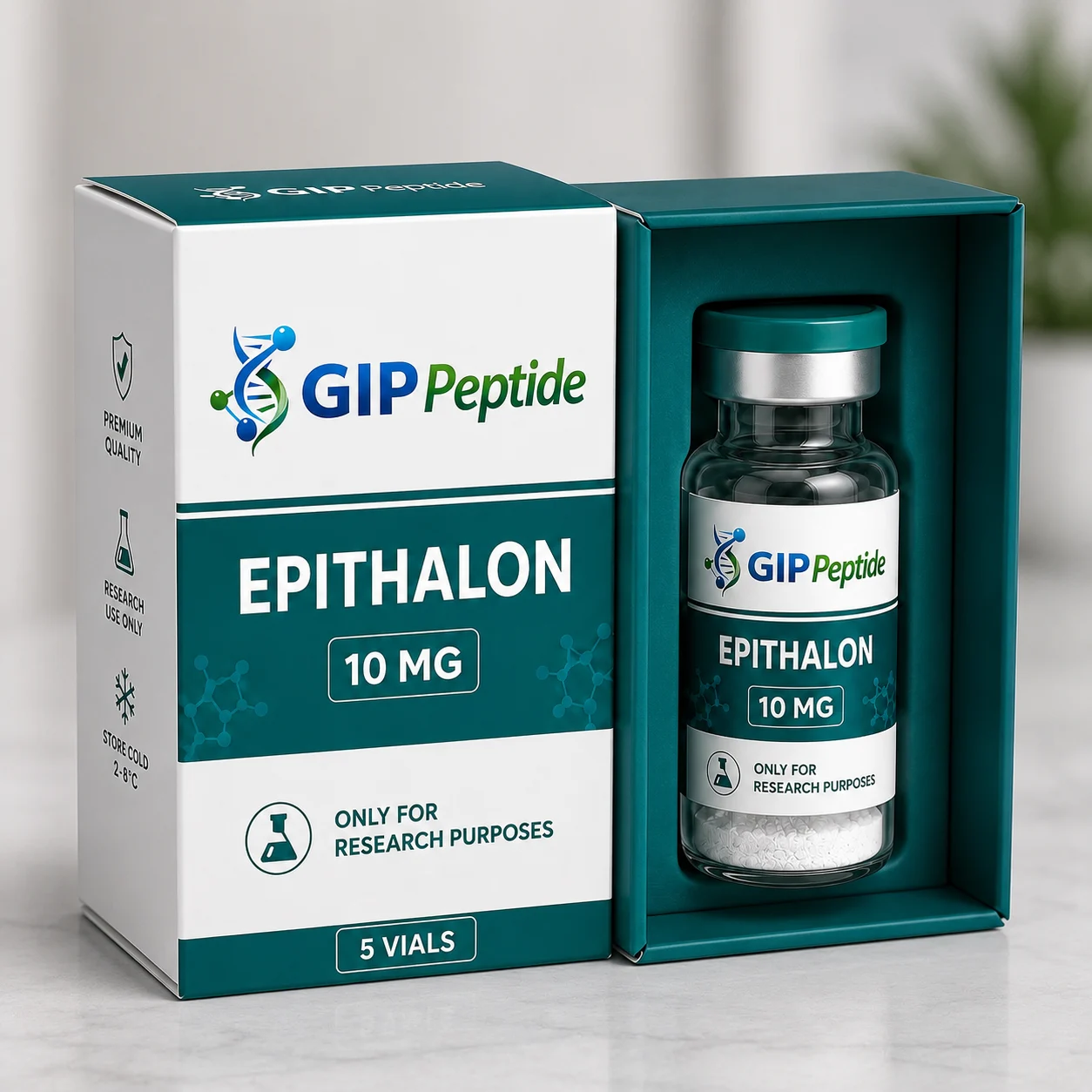
Epithalon is usually distributed as a lyophilized (freeze-dried) powder in sealed glass vials to ensure shelf-life stability.
Critical Handling Rules:
- Reconstitution Required: The dry powder must be mixed with a sterile diluent—typically Bacteriostatic Water-prior to use.
- Temperature Control: Keep unmixed vials in a cool, dark environment (refrigerated or frozen). Reconstituted liquid must be kept refrigerated and used within a limited window (typically 28 days).
- Light Protection: Direct light exposure degrades delicate peptide chains. Store vials in original packaging or dark containers.
Evaluating Supplier Purity Standards
Because Epithalon is predominantly sold within research channels, verifying product quality is critical for safety and scientific accuracy.
| Verification Standard | What It Measures | Why It Matters |
| Certificate of Analysis (COA) | Third-party laboratory verification | Confirms product identity and overall purity percentage. |
| HPLC Testing | High-Performance Liquid Chromatography | Identifies individual chemical components and detects contaminants. |
| Mass Spectrometry (MS) | Molecular weight analysis | Confirms the exact peptide sequence matches Epithalon’s structure. |
| Batch-Specific Reports | Lot number tracking | Ensures testing matches the exact batch you purchased, not an old template. |
Epithalon vs. Pinealon vs. GHK-Cu
Epithalon is often compared to other anti-aging peptides. Here is how it compares to Pinealon and GHK-Cu:
1. Epithalon vs. Pinealon
- Structure: Epithalon is a 4-amino-acid peptide (tetra peptide); Pinealon is a 3-amino-acid peptide (
- Research Focus: Pinealon is primarily studied for neuroprotection and brain health, whereas Epithalon targets telomeres and systemic cellular aging.
2. Epithalon vs. GHK-Cu
- Structure: GHK-Cu is a copper-binding tripeptide.
- Research Focus: GHK-Cu focuses on collagen synthesis, wound healing, and skin repair. Epithalon targets pineal signaling and enzymatic telomere maintenance.
- Combination Use: While often discussed together in longevity communities to target tissue repair and cellular aging simultaneously, direct clinical research on combining them is limited.
Risks & Safety Considerations
While Epithalon shows promise in laboratory settings, researchers and users should remain aware of safety parameters:
- Limited Clinical Human Trials: Long-term safety data in large-scale human populations remains limited.
- Sourcing & Contamination Risks: Product purity varies widely across unverified suppliers.
- Injection Site Sensitivity: Mild redness, localized swelling, or minor irritation at the injection site can occur.
- Unknown Drug Interactions: Potential interactions with prescription medications or metabolic conditions are not fully documented.
Final Takeaway
Epithalon remains one of the most compelling compounds in cellular longevity and bioregulator research. Whether analyzing its effects on telomerase or using a dosage calculator to prepare a vial, always prioritize verified 3rd-party purity testing (COAs), correct handling protocols, and guidance from a qualified healthcare professional.
