


Blog
GLP-3 Peptide Retatrutide vs Tirzepatide: Understanding Triple-Receptor Agonist Research
Jul
GLP-3 Peptide Retatrutide vs Tirzepatide
Research into metabolic peptides has expanded rapidly over the past several years, with retatrutide and tirzepatide becoming two of the most discussed compounds in the field. Although both peptides are associated with metabolic research, they differ in how they interact with hormone receptors and the scientific questions they are designed to investigate.
Many people search for the term GLP-3 peptide retatrutide because of its unique triple-receptor activity. While this phrase has become common in online searches, scientific literature generally describes retatrutide as a triple receptor agonist rather than a GLP-3 peptide.
This article compares retatrutide and tirzepatide, explains their mechanisms of action, reviews current research, discusses peptide quality considerations, and summarizes published safety observations.
What Is GLP-3 Peptide Retatrutide?
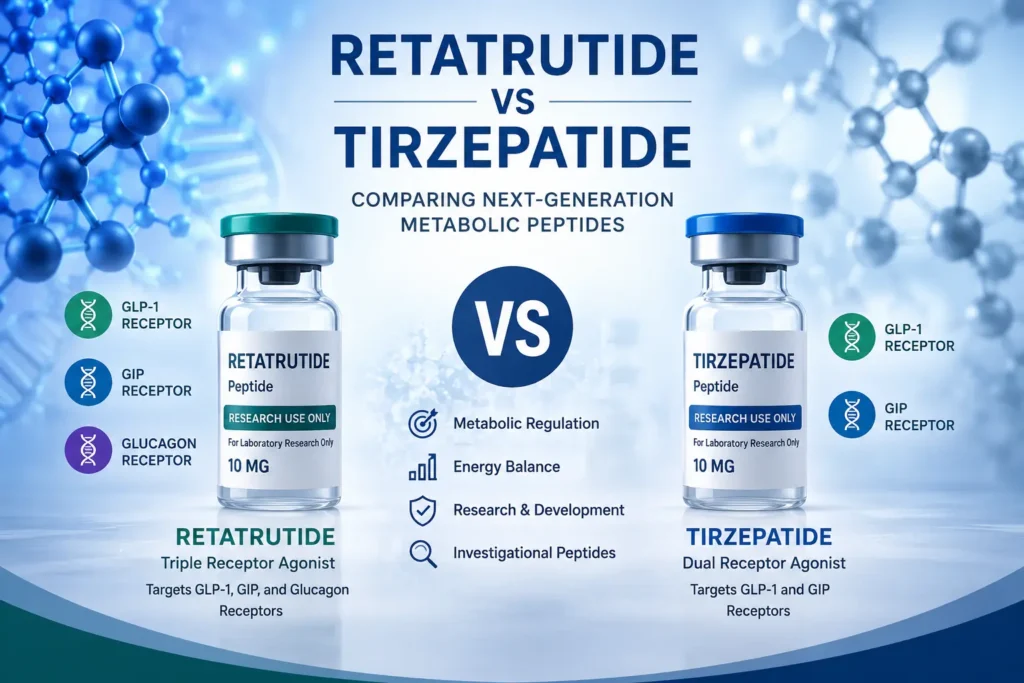
Retatrutide is an investigational peptide designed to activate three metabolic hormone receptors simultaneously:
- Glucagon-Like Peptide-1 (GLP-1) receptor
- Glucose-Dependent Insulinotropic Polypeptide (GIP) receptor
- Glucagon receptor
Because it activates three receptor pathways, retatrutide is widely described as a triple receptor agonist. Researchers continue to study how this broader receptor activity may influence metabolic regulation, energy balance, and glucose homeostasis compared with compounds that target fewer receptors.
The phrase GLP-3 peptide retatrutide is commonly used in online searches to describe this triple-action mechanism, even though it is not the formal scientific classification.
How Tirzepatide Differs
Tirzepatide is another important peptide in metabolic research. Unlike retatrutide, it activates two receptors:
- GLP-1 receptor
- GIP receptor
The principal difference between the two compounds is glucagon receptor activation. Retatrutide includes this third pathway, allowing researchers to investigate whether triple receptor activation produces different biological effects compared with dual receptor agonists.
Although both peptides are studied within metabolic research, they are not interchangeable and continue to be evaluated for different scientific objectives.
Retatrutide vs Tirzepatide: Key Differences
| Feature | Retatrutide | Tirzepatide |
| Receptor activity | GLP-1, GIP and glucagon | GLP-1 and GIP |
| Research classification | Triple receptor agonist | Dual receptor agonist |
| Primary research focus | Energy balance, metabolism and body weight pathways | Glucose regulation and metabolic function |
| Current status | Investigational | Approved for certain medical uses in some regions and also studied in research |
Evaluating Retatrutide Peptide Quality
Researchers often search for the best retatrutide peptide, but in laboratory settings, quality is determined by objective analytical standards rather than marketing claims.
Important quality indicators include:
- High peptide purity confirmed through analytical testing
- Identity verification using mass spectrometry
- Batch-to-batch consistency
- Certificate of Analysis (COA)
- High-Performance Liquid Chromatography (HPLC) testing
- Appropriate manufacturing and quality control procedures
Reliable analytical documentation supports reproducibility and confidence in research findings.
Pure Peptide Retatrutide
The term pure peptide retatrutide refers to the chemical integrity and analytical quality of the peptide.
High-purity samples reduce the likelihood of impurities or degraded peptide fragments influencing laboratory results. For this reason, researchers generally evaluate analytical testing data before incorporating investigational peptides into scientific studies.
Purity, identity, and consistency remain essential considerations for producing reliable experimental data.
Current Research
Current research involving retatrutide focuses on several areas of metabolic science, including:
- Energy expenditure
- Appetite regulation
- Glucose metabolism
- Body weight pathways
- Hormonal signaling
- Cardiometabolic biomarkers
Ongoing clinical studies continue to evaluate how triple receptor activation compares with dual receptor approaches in carefully controlled research settings.
Peptide Retatrutide Side Effects
Published clinical research has reported adverse events that are generally similar to those observed with other incretin-based therapies.
Frequently reported observations include:
- Nausea
- Vomiting
- Diarrhea
- Constipation
- Gastrointestinal discomfort
- Reduced appetite
Some studies have also reported temporary increases in heart rate, which continue to be evaluated as part of ongoing clinical research.
As with any investigational compound, researchers continue monitoring safety outcomes as additional evidence becomes available.
Retatrutide Peptide Amino Club
The phrase retatrutide peptide amino club is frequently associated with online discussions, research communities, and educational resources that explore investigational peptides.
While these communities often discuss emerging studies and scientific developments, peer-reviewed publications, validated laboratory data, and well-designed clinical studies remain the most reliable sources of scientific evidence.
How to Mix Retatrutide Peptide
Many researchers search for information about how to mix retatrutide peptide. However, retatrutide remains an investigational compound, and there is no universally accepted preparation method for general use.
Preparation procedures used during scientific investigations are established through validated laboratory protocols, institutional standards, and study-specific requirements. Published research primarily reports experimental findings rather than providing standardized preparation instructions.
Study Design Notes
Most published studies involving retatrutide follow carefully structured clinical protocols.
Researchers commonly evaluate:
- Metabolic biomarkers
- Body weight changes
- Glucose measurements
- Pharmacokinetic characteristics
- Pharmacodynamic responses
- Safety observations
- Adverse event reporting
These standardized approaches improve consistency and allow meaningful comparisons across clinical investigations.
Storage and Laboratory Handling
Storage recommendations for investigational peptides may vary depending on the manufacturer, formulation, and research protocol.
Laboratories generally follow the storage conditions provided with product documentation together with established institutional procedures. Proper environmental control, careful documentation, and appropriate sample handling help preserve peptide stability and support reliable research outcomes.
Compliance Notice
Retatrutide is an investigational peptide currently being studied in scientific and clinical research. The information presented in this article is intended for educational and research purposes only. It should not be interpreted as medical advice or as guidance for human use.
Conclusion
Retatrutide and tirzepatide represent two important areas of metabolic peptide research, but they differ significantly in receptor activity. While tirzepatide targets GLP-1 and GIP receptors, retatrutide also activates the glucagon receptor, making it a triple receptor agonist under investigation.
As scientific evidence continues to develop, researchers will gain a clearer understanding of how these different receptor combinations influence metabolism, energy regulation, and other physiological processes. Careful evaluation of peer-reviewed research, analytical quality, and standardized laboratory practices remains essential for interpreting emerging findings.
