Custom Peptides
Gip Peptide has years of expertise
Quotes for larger research product orders
Custom Peptides
Gip Peptide has years of expertise
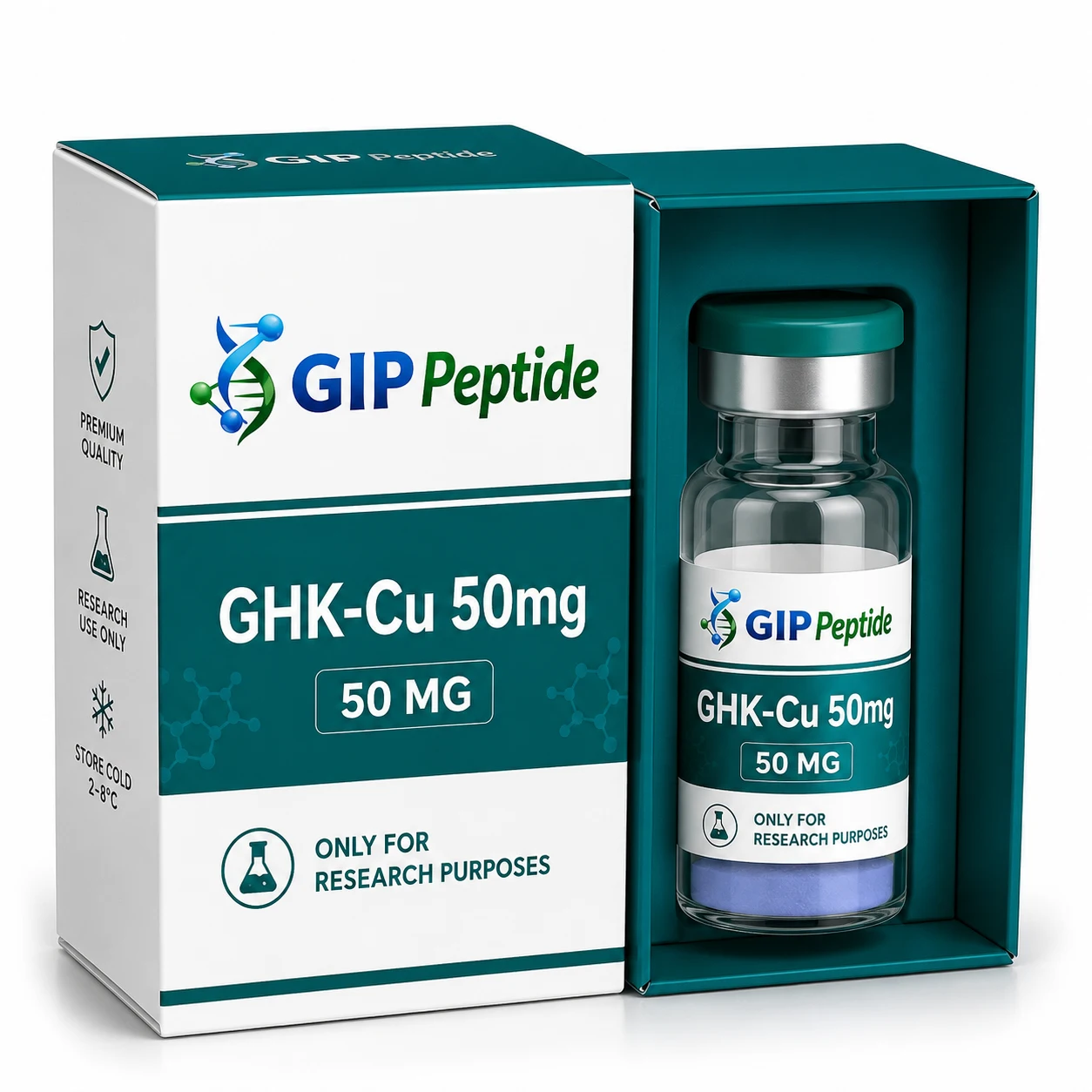
$35.00


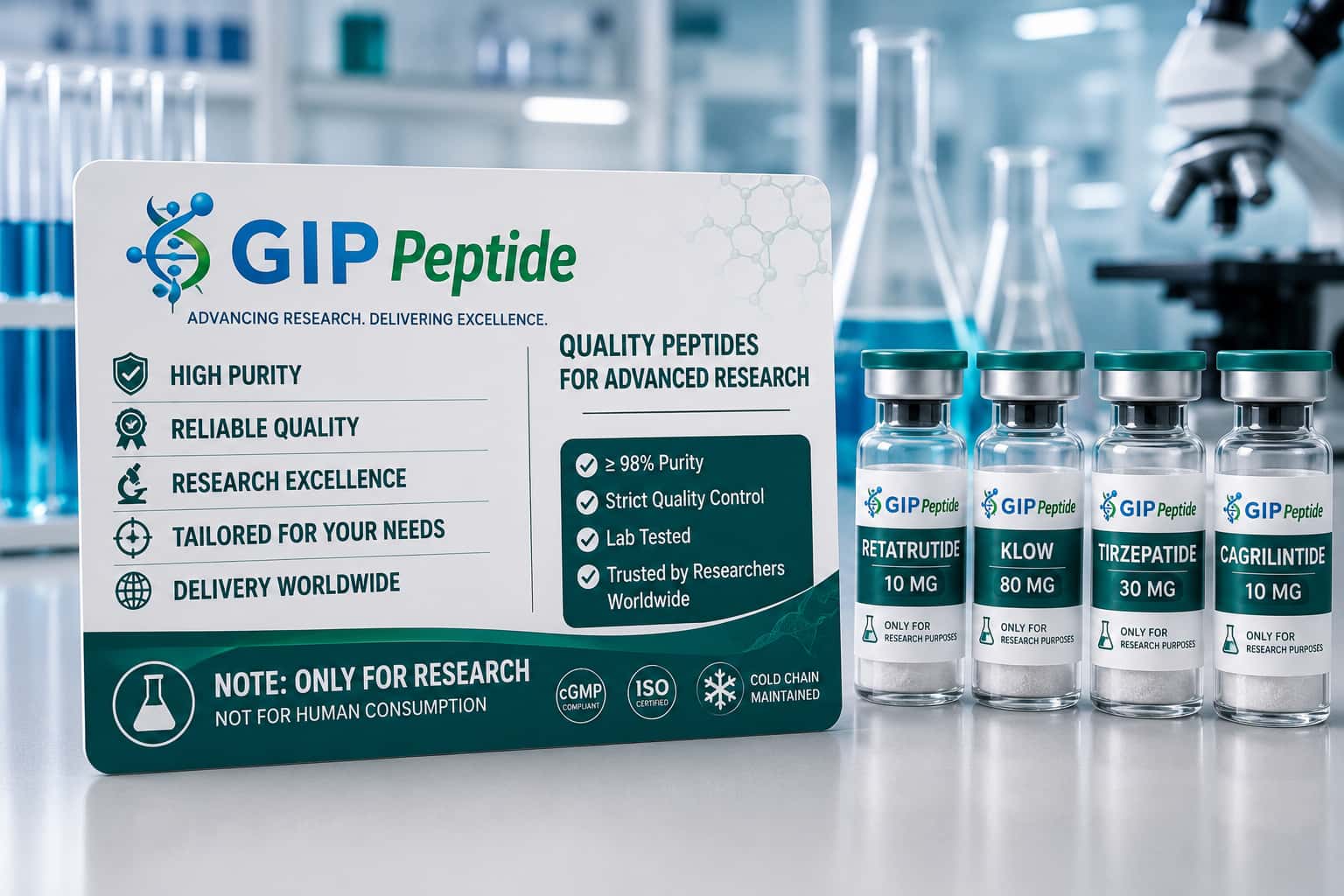
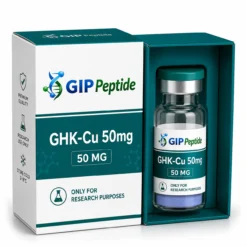
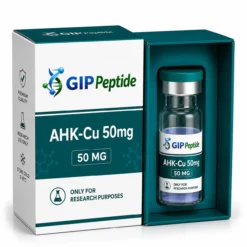
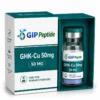
GHK-Cu peptide 50mg is a lyophilized copper peptide widely studied for its role in tissue biology, cellular signaling, extracellular matrix regulation, and skin-related research. The peptide consists of the naturally occurring tripeptide GHK bound to copper ions, forming a complex that has been investigated in laboratory models for several decades.
This product contains a GHK-Cu peptide 50mg lyophilized powder intended exclusively for scientific and laboratory research. It is supplied in a sterile research vial and requires reconstitution before laboratory use.
Researchers frequently search for topics such as GHK-Cu reconstitution 50mg, injectable GHK-Cu peptide, GHK-Cu 50 mg dosage, and handling procedures. This guide provides technical information designed to support proper laboratory preparation and storage.
The peptide is supplied as a freeze-dried (lyophilized) powder to improve long-term stability during transport and storage.
Lyophilization removes moisture while helping preserve the structural integrity of the peptide until reconstitution.
Typical characteristics include:
The appearance may vary slightly from white to pale blue depending on manufacturing conditions and the copper complex.
| Parameter | Specification |
| Product | GHK-Cu Peptide |
| Strength | 50mg |
| Form | Lyophilized powder |
| Grade | Research Use Only |
| Container | Sterile glass vial |
| Purity | Batch dependent (see COA) |
| Storage | Refrigerated after reconstitution |
GHK-Cu reconstitution 50mg refers to the process of dissolving the lyophilized peptide using an appropriate laboratory diluent before research use.
The final concentration depends entirely on the amount of diluent selected during preparation.
Researchers often calculate concentrations based on laboratory protocol requirements rather than using a universal standard.
Once reconstituted, inspect the solution for clarity before laboratory use.
There is no universally accepted research dosage for GHK-Cu because protocols vary significantly between laboratory investigations.
Experimental studies determine concentration according to:
Researchers should consult published literature and institutional research protocols when designing experiments.
The phrase injectable GHK-Cu peptide commonly appears in scientific discussions describing research formulations prepared for controlled laboratory investigation.
The product presented here is manufactured solely for research purposes and is not intended for self-administration, therapeutic use, or human consumption.
GHK-Cu has been investigated across numerous scientific fields involving cellular biology.
Areas of published research include:
These investigations continue to explore how copper peptides influence biological signaling pathways under laboratory conditions.
Researchers sometimes evaluate GHK-Cu alongside other research peptides depending on study objectives.
Combination studies involving BPC157 TB500 GHK-Cu have appeared in experimental research investigating tissue biology and recovery mechanisms.
Some laboratory protocols compare GHK-Cu with BPC-157 when examining connective tissue models and extracellular matrix activity.
Researchers have also explored Zn Thymulin together with GHK-Cu in investigations involving immune signaling and regenerative biology.
Certain experimental protocols evaluate GHK-Cu alongside Epitalon while studying cellular aging, repair pathways, and biological regulation.
These combinations remain subjects of laboratory investigation and should not be interpreted as established therapeutic approaches.
Microneedling GHK-Cu has become an area of scientific interest because researchers continue to investigate how copper peptides interact with skin biology following controlled mechanical stimulation.
Published laboratory work focuses on peptide penetration, extracellular matrix activity, collagen-related pathways, and wound-healing biology.
Some laboratories choose larger vial sizes, including GHK-Cu peptide 100mg, when conducting higher-volume research projects or multiple experimental procedures.
The preparation principles remain similar regardless of vial strength, although final concentrations depend on the amount of diluent used.
Before beginning laboratory work:
Proper documentation improves research consistency and reproducibility.
To maintain product quality:
Before Reconstitution
Store the lyophilized vial in a cool, dry location protected from direct light.
Long-term storage is generally recommended under refrigerated or frozen laboratory conditions according to institutional procedures.
After reconstitution:
Always follow established laboratory storage practices.
Scientific publications have examined GHK-Cu in relation to:
Current evidence continues to expand understanding of these biological mechanisms.
Most published investigations evaluate GHK-Cu using controlled laboratory models.
Variables commonly reported include:
Careful study design improves reproducibility and interpretation of results.
Side Effects
Because this product is intended exclusively for laboratory research, safety findings depend on individual experimental conditions.
Published literature discusses observations within controlled research environments rather than consumer use.
Researchers should:
This research material is not intended for human use.
It should not be used for diagnosis, treatment, prevention, or cure of disease.
Published research continues to evaluate how GHK-Cu interacts with various biological signaling pathways and other research compounds.
Current evidence remains under scientific investigation, and additional studies are needed to clarify these interactions.
Each production batch should undergo quality assessment before release.
Quality control commonly includes:
Researchers should review the Certificate of Analysis (COA) corresponding to the specific batch supplied before beginning laboratory work.
This GHK-Cu peptide 50mg product is supplied strictly for laboratory and scientific research.
It is not approved for human consumption, veterinary use, therapeutic application, or diagnostic purposes. Users are responsible for complying with all applicable laws, institutional policies, and research regulations governing the handling and use of laboratory materials.
Anti-Aging & Longevity

All GIP PEPTIDE



Reviews
There are no reviews yet.