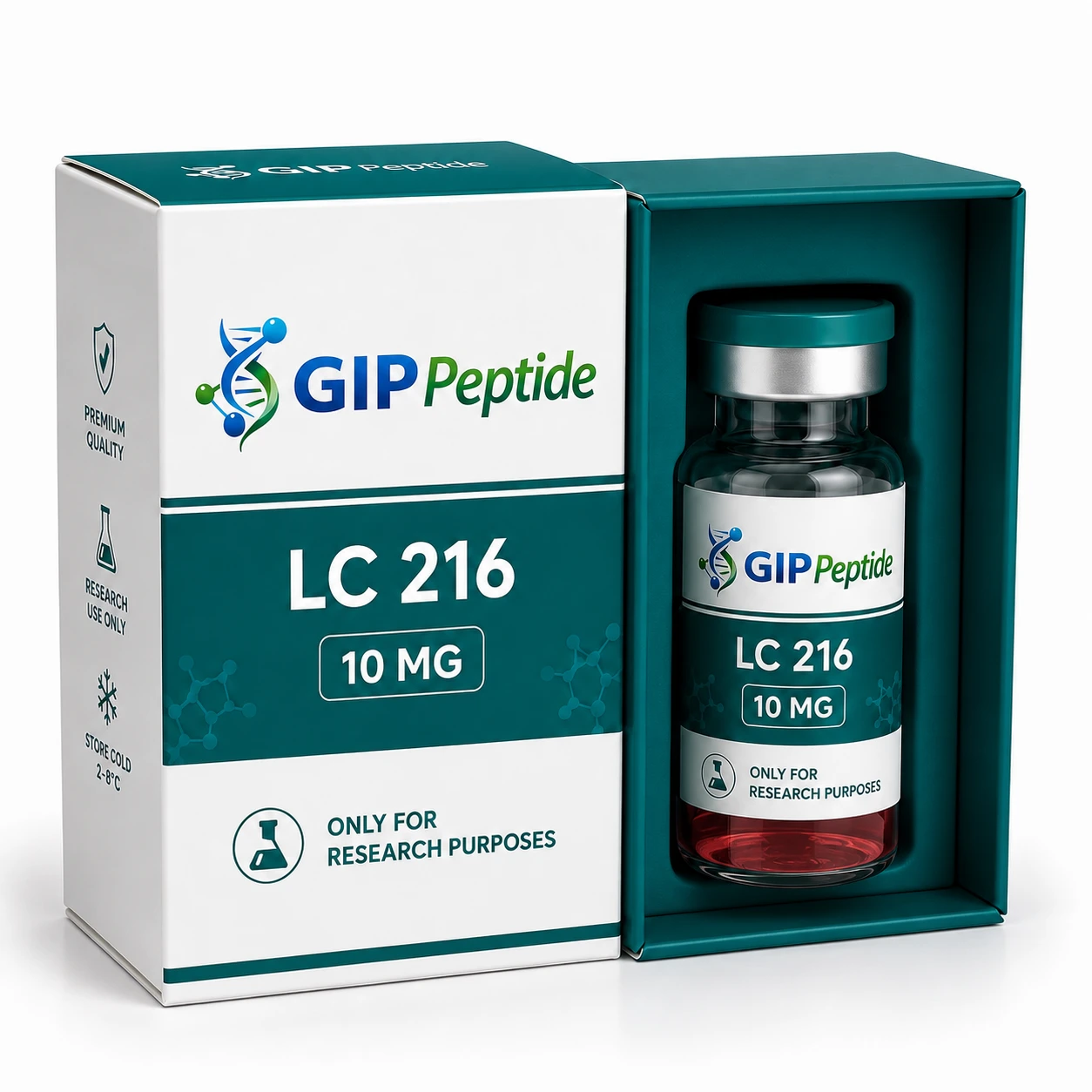
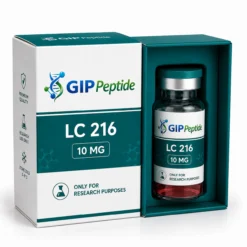
In cellular metabolism and lipotropic research, combination formulations designed to enhance lipid transport, liver function, and cellular energy production are central to laboratory investigation. The LC 216 peptide complex represents a specialized Lipo-B research formulation engineered to evaluate fat metabolism and cellular energy cascades in controlled environments.
By integrating key lipotropic agents alongside metabolic cofactors, the lipo b peptide structure provides researchers with a versatile tool for studying hepatic fat export, amino acid utilization, and mitochondrial efficiency.
Technical Specifications & Compound Details
| Attribute | Specification Details |
| Form | Lyophilized powder or specialized liquid solution |
| Formulation Class | Lipotropic / Amino Acid & Peptide Complex |
| Core Components | Lipotropic cofactors, amino acids, and B-complex derivatives |
| Purity Standard | \ge 98\% purity standard per active constituent |
| Physical Appearance | Clear liquid or uniform lyophilized cake |
Research Context & Scientific Applications
Reference Literature Focus
In scientific literature, research surrounding the lc 216 peptide focuses on lipotropic signaling and hepatic fat processing. Lipotropic compounds promote the export of fat from the liver and accelerate the breakdown of lipids during metabolic cycles.
- LC 216 Peptide Benefits in Research: Scientific evaluations highlight the role of LC 216 in supporting lean mass preservation, facilitating cellular methylation pathways, and promoting efficient fatty acid oxidation.
- Lipotropic MIC B12 Pathways: The formulation integrates principles of traditional lipotropic mic b12 research. Methionine, Inositol, and Choline (MIC) work synergistically with vitamin B12 (cyanocobalamin or methylcobalamin) to prevent lipid accumulation in liver tissue, enhance lecithin formation, and optimize cellular energy production.
Commonly Matched Compounds
In multi-pathway metabolic study designs, researchers frequently pair LC 216 with complementary research compounds, including:
- Growth hormone secretagogues (such as CJC-1295 or Ipamorelin) to evaluate joint fat oxidation and tissue recovery pathways.
- Incretin mimetics (such as GLP-1 agonists) to study metabolic rate retention during calorie-restricted models.
- Mitochondrial support agents (such as MOTS-c or NAD+ precursors) for broad cellular energy modeling.
Study Design Notes
The LC 216 formulation provides consistent ratios across liquid or lyophilized batches. Standardizing these lipotropic ratios enables research teams to maintain stable experimental baselines throughout longitudinal metabolic trials without needing to manually compound individual ingredients.
Compliance Notice: LC 216 is designated strictly for laboratory research, in vitro testing, and non-clinical scientific evaluation. It is not approved for human consumption, medical treatment, or clinical diagnostic procedures.
Dosing & Protocol Guidelines
Peptide & Lipotropic Handling Reference
Biological complexes and lipotropic compounds are sensitive to light, temperature variations, and mechanical agitation. Rapid shaking or improper storage conditions can degrade sensitive B-vitamin cofactors and peptide chains, reducing compound stability. Handle all containers with care.
Reconstitution Protocol
When preparing a lyophilized LC 216 formulation for laboratory testing, follow this controlled preparation sequence:
- Thermal Equalization
Prerequisite
Remove the vial from cold storage and let it rest naturally at room temperature for 15 to 20 minutes before adding diluent to avoid thermal shock. - Slow Solvent Introduction
Dilution
Sanitize the rubber stopper with an alcohol wipe. Using a sterile syringe, slowly introduce bacteriostatic water down the inside glass wall of the vial. Avoid directing the liquid stream straight onto the powder cake. - Gentle Swirling
Dissolution
Do not shake the vial. Gently roll the container between your palms or swirl it in a smooth, circular motion until the dry cake dissolves completely into a clear, uniform solution.
Storage Requirements
- Unreconstituted Powder / Unopened Containers: Store long-term in a laboratory freezer or cold environment between -20^\circ\text{C} and 4^\circ\text{C}, protected from light exposure.
- Reconstituted / Opened Solution: Store continuously in a laboratory refrigeration unit at 2^\circ\text{C} to 8^\circ\text{C}. Protect from direct light. For optimal experimental reliability, utilize liquid solutions within 28 days of preparation.
Side Effects & Safety Observations
Safety Observations
Preclinical and literature data indicate a predictable safety profile when handling lipotropic and peptide formulations:
- Injection Site Tolerance: Mild, transient localized redness or mild discomfort may occur at administration sites in animal models.
- Metabolic Shift: Temporary shifts in metabolic markers or mild gastrointestinal motility changes may be noted during dose escalation phases.
- B-Vitamin Excretion: Excess water-soluble B-vitamin components are excreted naturally through renal pathways without bioaccumulation toxicity.
Contraindications
Research protocols incorporating LC 216 should exclude experimental models exhibiting:
- Known severe allergies to B-complex vitamins, cobalt, or lipotropic amino acids.
- Severe renal impairment or end-stage hepatic disease models where nutrient clearance is compromised.
- Pregnancy or lactation models due to insufficient safety data regarding embryonic exposure.
Interaction Review
Co-administering LC 216 with other lipotropic agents or heavy methyl-donor supplements requires baseline tracking to prevent unnecessary pathway saturation. Combining the compound with unmonitored metabolic regulators should be executed with proper controls to maintain clear trial baselines.
COA & Testing Integrity
Certificate of Analysis (COA)
To guarantee experimental integrity and safety, every batch of LC 216 must be verified by an independent, third-party analytical laboratory. A fully compliant COA verifies:
- Mass Spectrometry (MS) & Spectroscopy: Confirms the precise identity and molecular presence of each lipotropic component and peptide sequence.
- High-Performance Liquid Chromatography (HPLC): Measures the absolute purity level of the batch, ensuring it meets or exceeds the required 98% purity standard without chemical contaminants or heavy metals.
Quality Inspection Checklist
Prior to introducing a new batch of LC 216 into active laboratory models, complete the following quality checks:
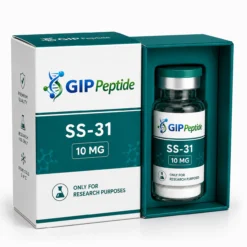
- The protective seal is fully intact and shows no signs of previous opening or physical damage.
- Third-party MS and HPLC testing documentation corresponds directly to the lot number printed on the vial.
- The dry powder or pre-mixed liquid shows no signs of discoloration, moisture intrusion, or degradation.
- Post-reconstitution liquid appears completely transparent and free from cloudiness, precipitation, or floating particles.


Reviews
There are no reviews yet.