Custom Peptides
Gip Peptide has years of expertise
Quotes for larger research product orders
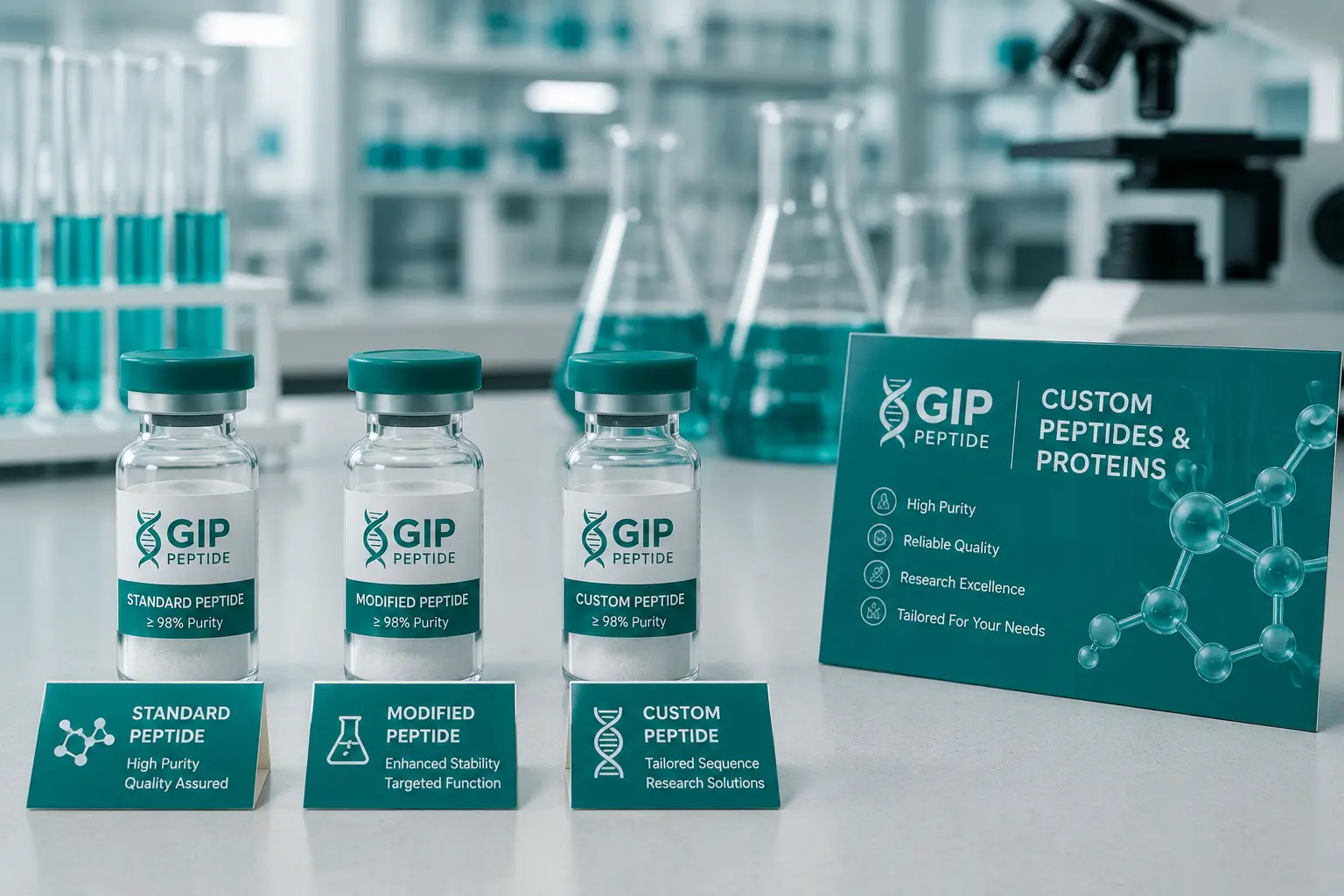
Custom Peptides
Gip Peptide has years of expertise
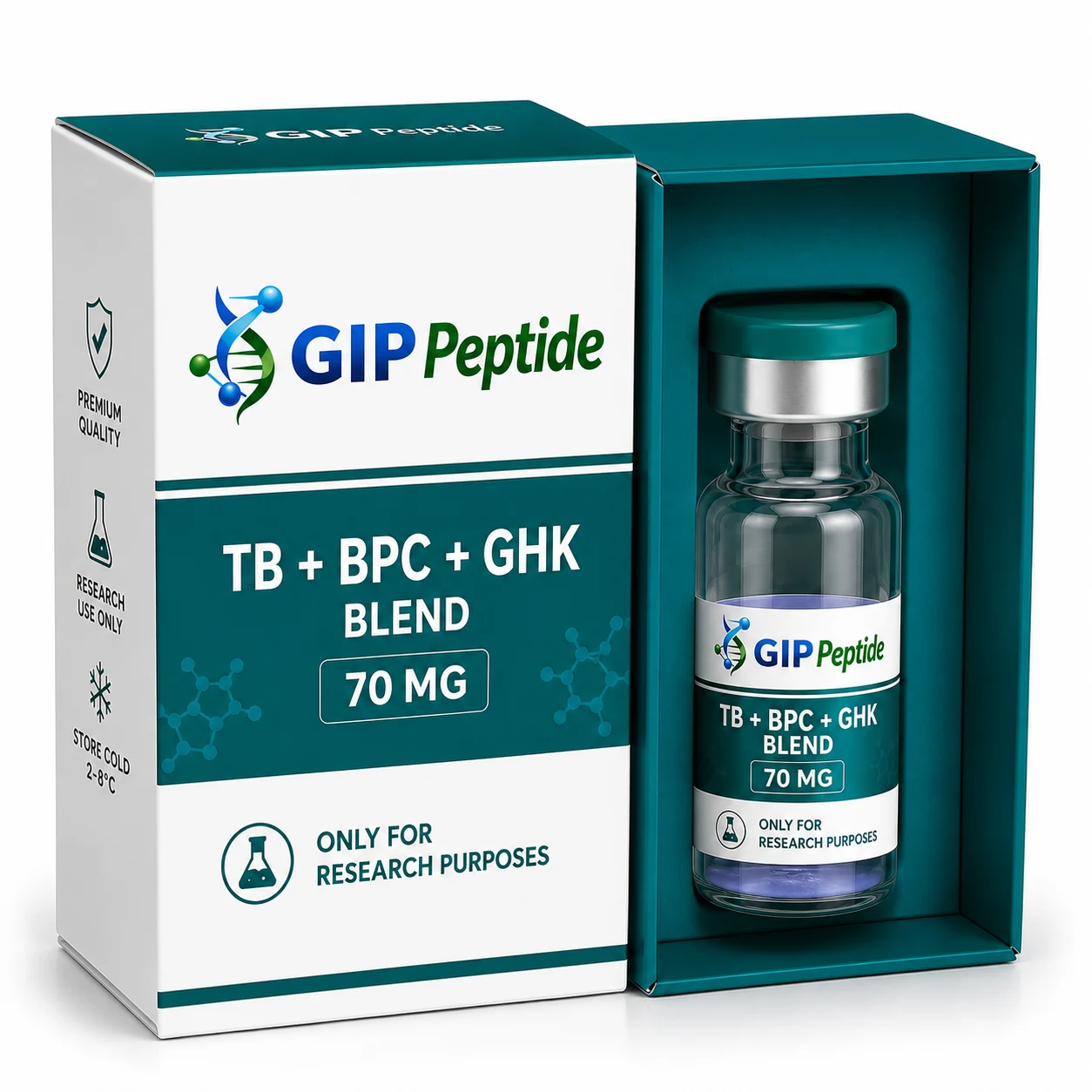
$200.00

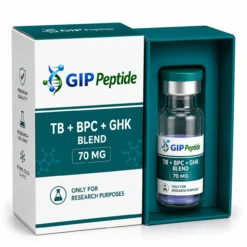
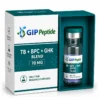
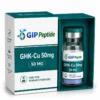
In cellular repair, collagen synthesis, and regenerative biology, multi-peptide blends offer targeted synergistic pathways. The ghk cu tb 500 bpc 157 blend combines three of the most extensively studied tissue recovery agents into a single 70mg high-capacity vial.
Known across literature as the bpc 157 tb 500 ghk cu blend, or informally as the glow ghk cu tb 500 bpc 157formulation, this triad unites localized angiogenesis, systemic cell migration, and extracellular matrix remodeling in a single, highly stable format.
| Attribute | Specification Details |
| Form | Lyophilized (freeze-dried) powder |
| Total Capacity | 70mg total mass per vial |
| Active Components | GHK-Cu (Copper Peptide), TB-500, and BPC-157 |
| Purity Benchmark | \ge 98\% purity standard per constituent |
| Physical Appearance | Solid, uniform cake (light blue tint due to GHK-Cu presence) |
In scientific literature, evaluating a bpc 157 tb 500 and ghk cu compound allows researchers to observe multi-layered regenerative cascades in connective tissue and dermal models:
The tri-component formulation, often referenced as ghk tb bpc or bpc tb ghk, eliminates the need to compound separate single-vial solutions during multi-subject trials. Combining 70mg total mass across these three distinct targets provides consistent lot-to-lot reliability in longitudinal regenerative assays.
In broader research frameworks, this 70mg blend is frequently studied alongside:
The high-density 70mg total mass capacity is structured specifically for high-throughput screening or extended multi-week trial arms. Standardizing these three active signaling agents in a unified vial reduces human error during stock solution preparation.
Compliance Notice: This blend is designated strictly for laboratory research, in vitro testing, and non-clinical scientific evaluation. It is not approved for human consumption, direct medical administration, or clinical diagnostic use.
Glow GHK Cu TB 500 BPC 157 Dosage & Calculation
When establishing protocols using the glow ghk cu tb 500 bpc 157 dosage reference, calculations must account for the total 70mg combined mass. Precise volumetric math ensures accurate concentration ratios across experimental models.
Peptide structures contain sensitive amino acid chains connected by delicate peptide bonds. Physical shock, rapid temperature changes, or aggressive agitation can disrupt these molecular bonds, causing protein shearing and a loss of biological activity. Handle all vials with extreme care.
To properly reconstitute the 70mg multi-peptide blend in a controlled laboratory setting, follow this protocol:
Safety Observations
Data drawn from preclinical and cellular trial literature demonstrate favorable tolerability across all three component sequences:
Research protocols incorporating this blend should exclude experimental models displaying:
Co-administering this multi-peptide blend alongside other strong angiogenic factors or growth mimetics requires careful baseline tracking. Combining the compound with unmonitored enzymatic inhibitors should be executed with proper controls to maintain clear trial baselines.
Certificate of Analysis (COA)
To guarantee trial validity and batch consistency, every lot of the TB+BPC+GHK 70mg blend must undergo analytical verification by an independent, third-party laboratory. A compliant COA verifies:
Prior to introducing a new reconstituted batch into an active research sequence, verify the following physical and documentation parameters:
Anti-Aging & Longevity

All GIP PEPTIDE



Reviews
There are no reviews yet.