Custom Peptides
Gip Peptide has years of expertise
Quotes for larger research product orders
Custom Peptides
Gip Peptide has years of expertise
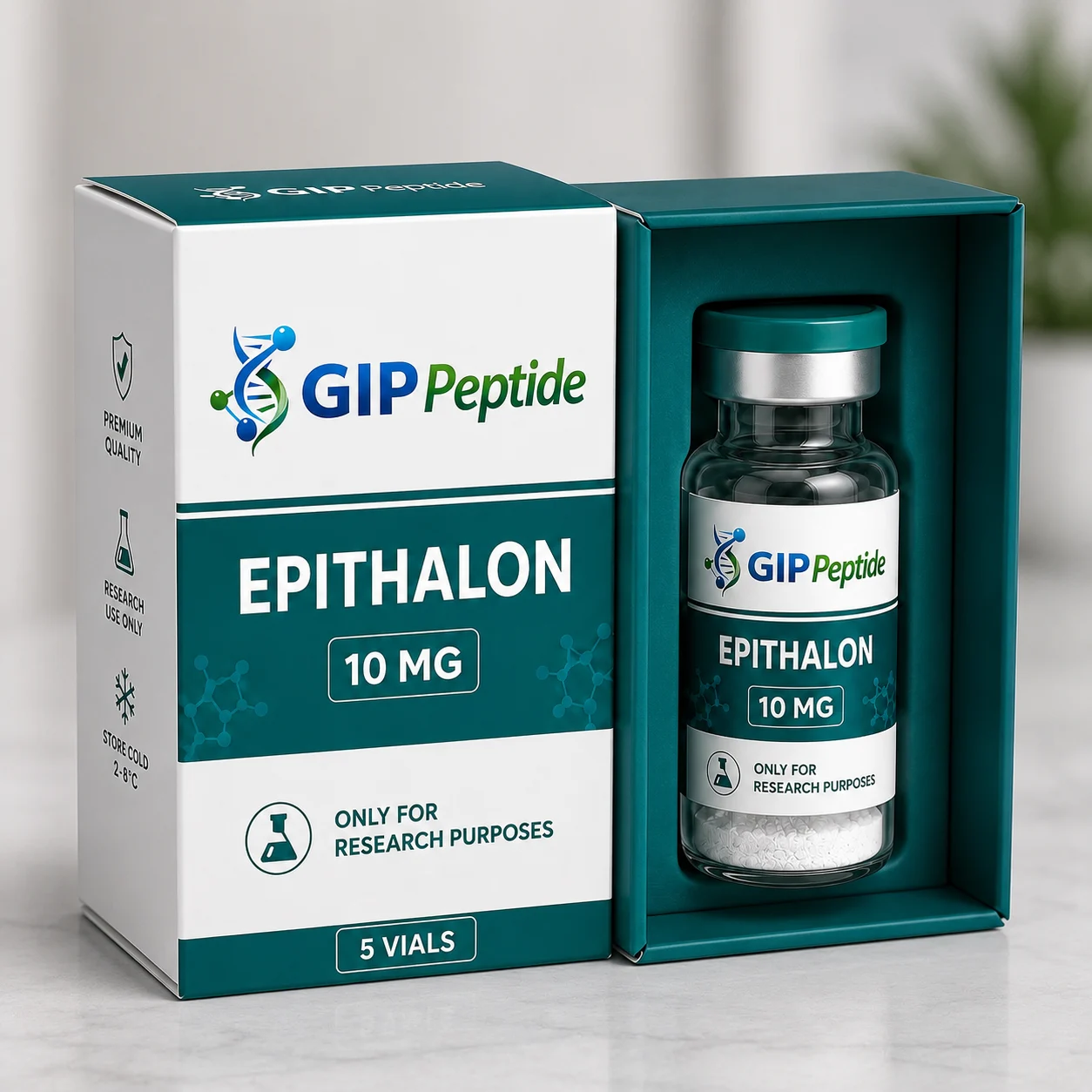
$38.00


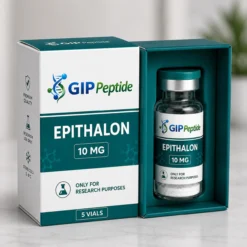
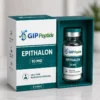
Epithalon 10mg is a research peptide supplied in a lyophilized powder form for laboratory and scientific investigation. It has attracted interest in aging research, cellular biology, circadian rhythm studies, and peptide science. Before use in research settings, the peptide requires proper reconstitution using appropriate laboratory procedures.
This page provides general product information, handling guidance, research references, and safety considerations for Epithalon 10mg. It is intended for research and educational purposes only.
Epithalon, also known as Epitalon, is a synthetic tetrapeptide studied for its potential role in cellular aging, telomere biology, oxidative stress, and circadian regulation. Researchers have investigated its biological activity in experimental laboratory models to better understand mechanisms associated with healthy aging.
| Specification | Details |
| Product | Epithalon 10mg |
| Appearance | White lyophilized powder |
| Purity | Verified through laboratory testing |
| Container | Sterile glass vial |
| Storage Form | Freeze-dried powder |
| Intended Use | Research purposes only |
Proper epithalon 10mg reconstitution helps maintain peptide stability throughout laboratory research.
General laboratory practice typically includes:
The exact amount of diluent depends on the concentration required for the specific research protocol.
Preparation should always be performed using sterile laboratory techniques.
Recommended preparation practices include:
Correct storage supports peptide stability during research.
There is no universally accepted epitalon protocol for research because study designs vary depending on the objectives of each investigation.
Researchers typically establish protocols based on:
Experimental protocols should always follow approved scientific procedures and applicable laboratory regulations.
Interest in epitalon nasal spray has increased within peptide research because intranasal delivery is being explored for various experimental compounds.
Current scientific literature remains limited regarding intranasal Epithalon formulations, and there is no standardized preparation or administration protocol established for routine research use.
Researchers considering this delivery route should evaluate available literature and institutional guidelines before designing experimental studies.
Research investigating epitalon for sleep has examined the peptide’s relationship with circadian rhythm regulation and pineal gland activity.
Several experimental studies have explored whether Epithalon influences biological processes associated with sleep cycles through its effects on cellular signaling and melatonin-related pathways.
Current findings remain part of ongoing scientific research and should not be interpreted as established clinical evidence.
Interest in epitalon hair growth primarily comes from research into cellular aging and tissue regeneration.
Scientists have investigated how cellular repair mechanisms, oxidative stress, and aging processes may influence hair follicle biology. While these areas continue to be studied, there is currently limited evidence supporting specific conclusions regarding Epithalon and hair growth.
Additional research is needed to better understand any potential relationship.
Commonly Matched With
Depending on research objectives, Epithalon is sometimes studied alongside other research peptides investigating cellular health and longevity.
Combination studies should always follow approved laboratory protocols.
Research
Epithalon continues to be investigated across several scientific fields.
Current areas of research include:
Most available evidence comes from laboratory and preclinical investigations, with continued research needed to better understand biological activity.
Scientific publications involving Epithalon commonly examine:
Researchers should consult peer-reviewed literature when designing experimental protocols.
When developing laboratory studies involving Epithalon, researchers commonly consider:
Careful study design improves data consistency and reproducibility.
Each production batch should undergo quality assessment before release.
Testing commonly includes:
A Certificate of Analysis (COA) provides documentation relating to product identity and laboratory testing.
Typical analytical procedures may include:
Laboratory testing helps confirm that products meet established manufacturing specifications.
Published information regarding Epithalon largely originates from research settings.
Potential observations reported in research literature may include:
These observations should not be interpreted as complete safety information.
Researchers should:
Epithalon is intended for laboratory research only.
It should not be used:
Published information regarding interactions between Epithalon and other research compounds remains limited.
Researchers should evaluate potential interactions carefully when designing combination studies and document all variables within the experimental protocol.
Anti-Aging & Longevity

All GIP PEPTIDE


Reviews
There are no reviews yet.