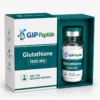
Glutathione 1500mg Peptide:
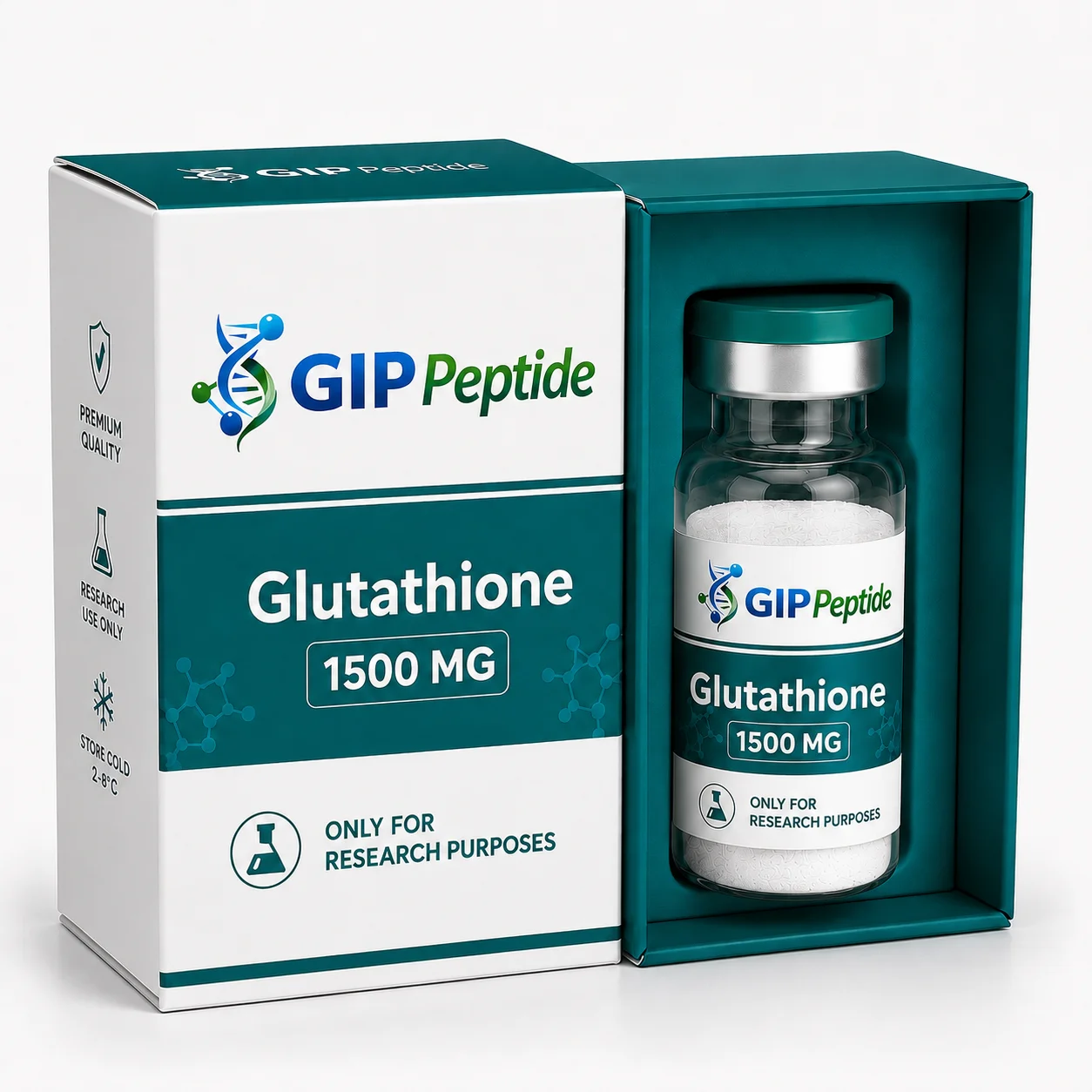
In cellular biology and oxidative stress research, endogenous antioxidant systems play a foundational role in maintaining cellular homeostasis. The glutathione 1500mg peptide formulation is a specialized tripeptide complex engineered for rigorous laboratory investigation into cellular detoxification, reactive oxygen species (ROS) neutralization, and mitochondrial protection.
Composed of three amino acids glutamic acid, cysteine, and glycine glutathione acts as the primary intracellular antioxidant. Utilizing a high-capacity glutathione 1500mg vial allows research laboratories to run consistent, multi-sample assays while maintaining uniform concentration baselines.
Technical Specifications & Product Details
| Attribute | Specification Details |
| Form | Lyophilized (freeze-dried) powder |
| Vial Capacity | 1500mg total mass |
| Molecular Structure | Tripeptide (\gamma-L-Glutamyl-L-cysteinylglycine) |
| Purity Standard | \ge 98\% purity standard |
| Physical Appearance | Uniform, solid white cake or powder |
Research Context & Scientific Applications
Reference Literature Focus & Glutathione 1500mg Benefits
In scientific literature, studies evaluating 1500mg glutathione center on its central function in phase II hepatic detoxification and free radical scavenging. Key glutathione 1500mg benefits documented in non-clinical research literature include:
- Oxidative Stress Reduction: Direct neutralization of hydroxyl radicals, superoxide anions, and organic peroxides.
- Cellular Detoxification: Conjugation with electrophilic xenobiotics to facilitate cellular metabolic waste removal.
- Pigmentation & Cellular Health: Modulation of melanogenesis pathways by tilting melanin synthesis from eumelanin to pheomelanin in dermal cell models.
- Mitochondrial Support: Maintenance of inner mitochondrial membrane redox states and protection of mitochondrial DNA from oxidative decay.
Commonly Matched Compounds
In multi-pathway research models, glutathione is frequently evaluated alongside complementary antioxidant and metabolic agents, including:
- Vitamin C (Ascorbic Acid): Evaluated for its synergistic redox cycle recycling of oxidized glutathione back to its active reduced state.
- Alpha-Lipoic Acid (ALA): Studied for its capacity to restore intracellular glutathione concentrations.
- NAD+ Precursors: Combined in bioenergetic protocols to measure simultaneous metabolic rate and antioxidant capacity.
Study Design Notes
The high-density 1500mg format is specifically structured for high-throughput research or continuous longitudinal trial arms. Utilizing an intact single-lot vial minimizes variance when preparing stock solutions across extended experimental series.
Compliance Notice: This compound is designated strictly for laboratory research, in vitro testing, and educational evaluation. It is not approved for human consumption, direct medical administration, or clinical diagnostic use.
Dosing & Protocol Guidelines
Peptide & Tripeptide Handling Reference
Glutathione contains a sensitive sulfhydryl (thiol) group on its cysteine residue, which is susceptible to oxidation upon air exposure, thermal shifts, or violent agitation. Proper laboratory handling prevents the reduced form from prematurely converting into its inactive oxidized state.
Glutathione 1500mg Reconstitution Protocol
To execute proper glutathione 1500mg reconstitution in a controlled environment, follow this standardized step-by-step procedure:
- Thermal Equalization
Prerequisite
Remove the lyophilized 1500mg vial from cold storage. Allow it to sit at room temperature for 15 to 20 minutes to prevent thermal shock prior to adding diluent. - Solvent Introduction
Dilution
Sanitize the rubber stopper with an alcohol wipe. Using a sterile syringe, slowly introduce bacteriostatic water down the inside glass wall of the vial. Avoid spraying the diluent directly onto the lyophilized cake. - Gentle Rotation
Dissolution
Do not shake the vial, as rapid agitation introduces oxygen and induces protein foaming. Gently roll the container between your palms or swirl it smoothly in circles until the white cake is completely dissolved.
Storage Requirements
- Unreconstituted Powder: Store long-term in a laboratory freezer at -20^\circ\text{C} protected from light exposure to maintain stability for up to 24 months.
- Reconstituted Liquid: Store in a specialized refrigeration unit between 2^\circ\text{C} and 8^\circ\text{C}. Protect solution from light and air exposure. For optimal experimental accuracy, utilize reconstituted liquid within 21 to 28 days.
Side Effects & Safety Observations
Safety Observations
Data derived from preclinical literature demonstrate a high degree of tolerability in controlled models:
- Injection Site Responses: Minor, temporary surface irritation or localized sensation may occur at administrative sites in animal models.
- Gastrointestinal Responses: Mild, transient digestive changes observed when higher concentration gradients are introduced rapidly.
- Renal Clearance: Soluble peptide metabolites are processed normally through standard renal clearance pathways.
Contraindications
Research models incorporating glutathione should exclude experimental systems displaying:
- Known hypersensitivity to sulfur-containing compounds or specific tripeptide sequences.
- Concurrent administration with heavy metal chemotherapy agents where antioxidant action might interfere with trial objectives.
- Pregnancy or lactation models due to an absence of comprehensive embryonic exposure data.
Interaction Review
Combining glutathione with strong oxidizing agents in solution can neutralize its functional capacity prior to application. Baseline tracking is recommended when pairing glutathione with other potent thiol-containing compounds to maintain distinct assay controls.
COA & Testing Integrity
Certificate of Analysis (COA)
To guarantee trial validity and batch consistency, every lot of glutathione 1500mg must undergo analytical verification by an independent, third-party laboratory. A compliant COA includes:
- Mass Spectrometry (MS): Confirms the exact molecular weight and amino acid sequence identity of reduced glutathione.
- High-Performance Liquid Chromatography (HPLC): Verifies sample purity, ensuring the batch meets or exceeds the required 98% purity standard without oxidation byproducts.
Quality Inspection Checklist
Prior to introducing a new reconstituted batch into an active research sequence, verify the following physical and documentation parameters:
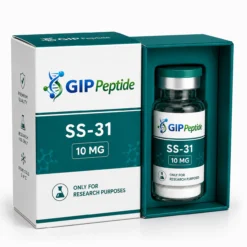
- The protective flip-off cap is intact and shows no signs of physical compromise.
- Independent MS and HPLC documentation directly matches the lot number on the vial label.
- The lyophilized cake is dry, uniform, and uniformly white without discoloration.
- Post-reconstitution solution appears entirely clear, colorless, and free of suspended particulate matter.


Reviews
There are no reviews yet.