Custom Peptides
Gip Peptide has years of expertise

Quotes for larger research product orders
Custom Peptides
Gip Peptide has years of expertise
$90.00

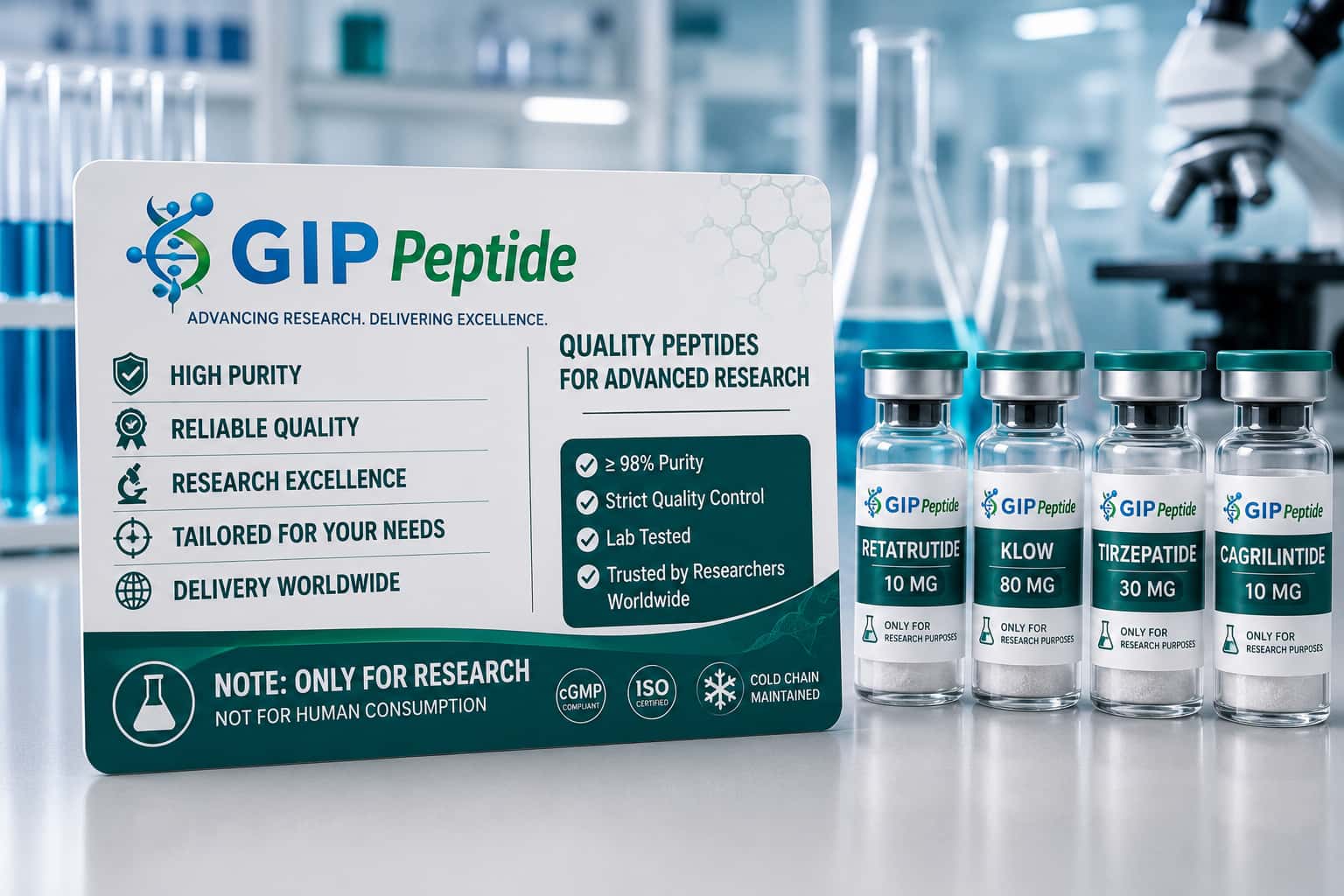
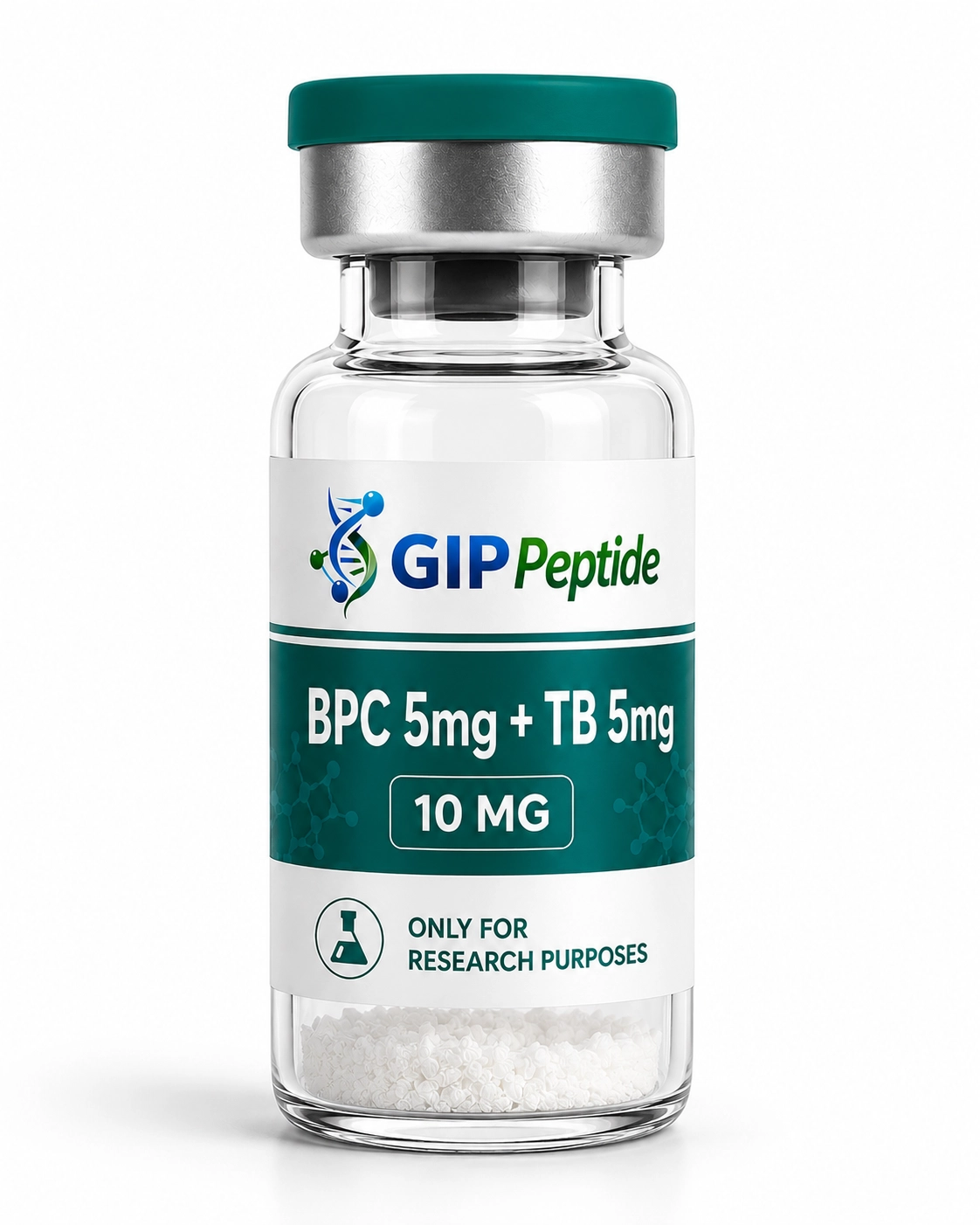
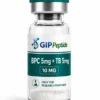
In regenerative biology and tissue recovery research, multi-peptide formulations provide strategic advantages by combining distinct repair mechanisms. The bpc 5mg + tb 5mg blend integrates equal ratios of Body Protection Compound-157 (BPC-157) and Thymosin Beta-4 derivative (TB-500) into a single research vial.
By combining these two distinct signaling agents, this co-formulation allows laboratory researchers to evaluate soft tissue repair, cell migration, and angiogenesis simultaneously, eliminating the variability associated with mixing separate compounds during experimental setups.
| Attribute | Specification Details |
| Form | Lyophilized (freeze-dried) powder |
| Total Capacity | 10mg total mass (5mg BPC-157 / 5mg TB-500) |
| Formulation Type | Dual regenerative peptide blend |
| Purity Standard | \ge 98\% purity standard per constituent |
| Physical Appearance | Uniform, solid white cake |
Reference Literature Focus
In scientific literature, research involving the bpc-157 5mg + tb-500 5mg blend focuses on accelerated soft tissue healing, extracellular matrix remodeling, and anti-inflammatory signaling pathways.
Utilizing a pre-formulated bpc-157 tb-500 5mg/5mg vial provides a balanced 1:1 ratio of both active peptides. This eliminates baseline discrepancies when assessing combined cellular responses in tendon, ligament, muscle, and endothelial cell models.
In broader regenerative research designs, this dual-peptide blend is frequently evaluated alongside complementary tissue support compounds, including:
The 10mg total capacity (5mg of each peptide) offers sufficient mass for extended longitudinal trial arms. Maintaining a unified lot ratio across multi-subject animal models reduces human compounding error and ensures consistent assay results.
Compliance Notice: This blend is designated strictly for laboratory research, in vitro testing, and non-clinical scientific evaluation. It is not approved for human consumption, direct medical treatment, or clinical diagnostic use.
Peptide Handling Reference
Peptides are fragile molecular chains consisting of amino acids linked by sensitive bonds. Physical shock, rapid thermal changes, or aggressive agitation can disrupt these molecular bonds, causing denaturation and loss of biological function. Handle all vials with care.
To execute proper bpc 157 tb 500 5mg reconstitution in a laboratory setting, follow this standardized sequence:
Safety Observations
Data drawn from preclinical literature demonstrate a favorable safety profile across both peptide sequences:
Research protocols incorporating BPC-157 and TB-500 should exclude experimental models displaying:
Co-administering this blend alongside other potent angiogenic agents or growth factors requires baseline tracking. Combining the compound with unmonitored enzyme inhibitors should be executed with proper controls to maintain clear trial baselines.
Certificate of Analysis (COA)
To guarantee trial validity and batch consistency, every lot of BPC 5mg + TB 5mg must undergo analytical verification by an independent, third-party laboratory. A compliant COA verifies:
Prior to introducing a new reconstituted batch into an active research sequence, verify the following parameters:
Anti-Aging & Longevity

All GIP PEPTIDE



Reviews
There are no reviews yet.