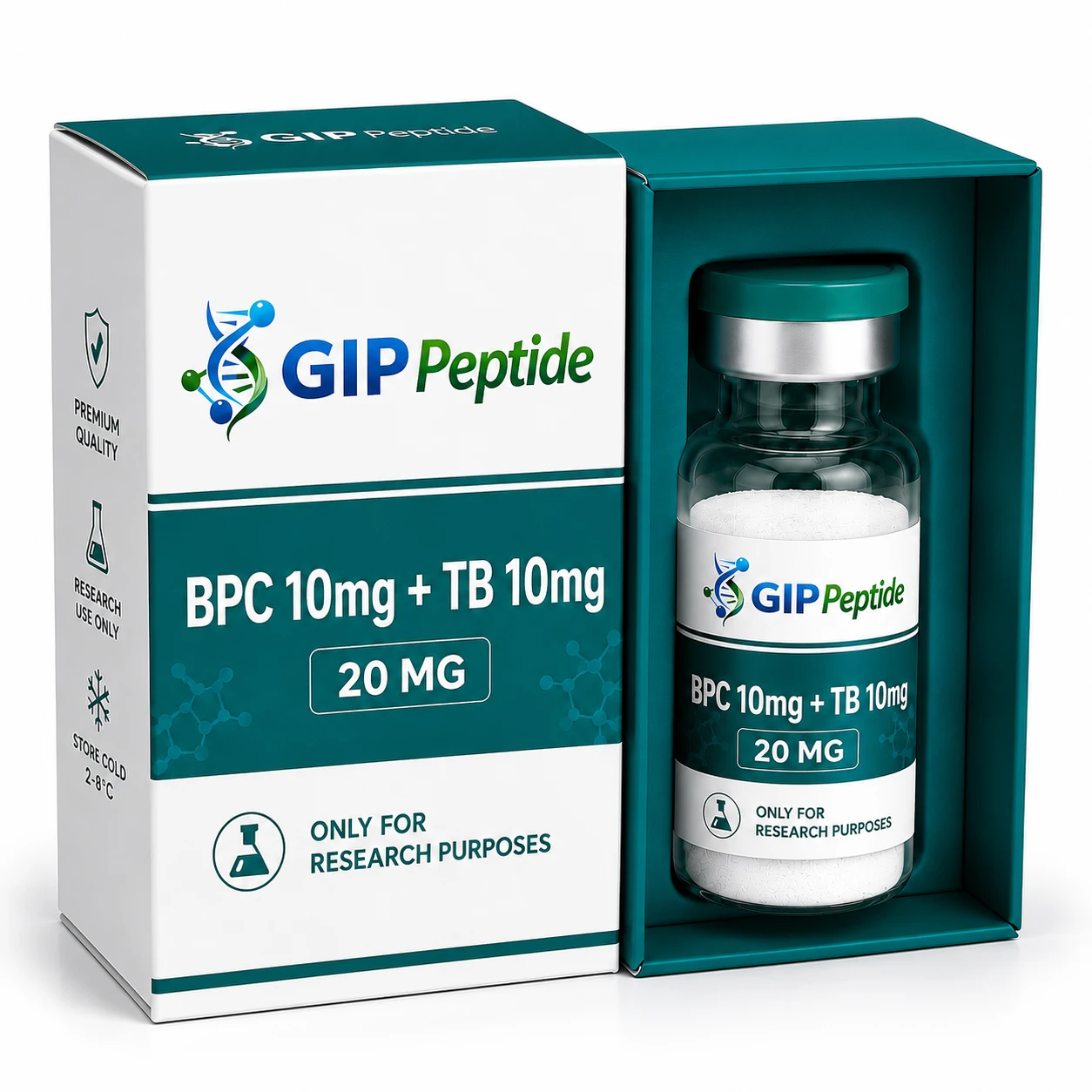
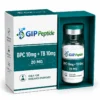
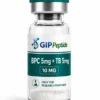
BPC 10mg + TB 10mg
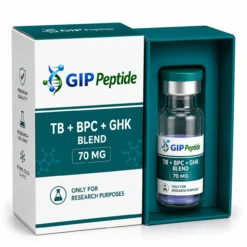
In cellular repair and tissue regeneration research, combining synergistic signaling pathways offers significant structural and analytical benefits. The BPC 10mg + TB 10mg peptide blend is a high-capacity, dual-action formulation engineered for extended laboratory protocols and large-scale experimental trials.
By combining equal 10mg proportions of Body Protection Compound-157 (BPC-157) and Thymosin Beta-4 derivative (TB-500) into a single 20mg capacity vial, this blend optimizes research workflows while ensuring exact proportional consistency across multi-week studies.
Technical Specifications & Compound Details
| Attribute |
Specification Details |
| Form |
Lyophilized (freeze-dried) powder |
| Total Vial Capacity |
20mg total mass (10mg BPC-157 / 10mg TB-500) |
| Formulation Class |
High-capacity dual regenerative peptide blend |
| Purity Benchmark |
\ge 98\% purity verified per component |
| Physical State |
Uniform, solid white cake |
Research Context & Scientific Applications
Reference Literature Focus
In scientific literature, the combination of BPC-157 and TB-500 is evaluated for its complementary mechanisms in soft tissue recovery, angiogenesis, and cell migration cascades:
- BPC-157 Action: Acts primarily on localized extracellular matrix protection, upregulating growth factor receptors (such as VEGFR2), promoting early-stage microvascular formation, and accelerating tendon-to-bone junction healing.
- TB-500 Action: Operates systemically via actin-sequestering mechanisms to stimulate cell migration, enhance dermal fibroblast mobility, and reduce fibrotic scar tissue deposition in damaged muscle and cardiac tissues.
High-Capacity 10mg/10mg Vial Advantage
Utilizing a BPC 10mg + TB 10mg vial provides double the capacity of standard research formats. This allows high-throughput research teams or longitudinal trial arms to maintain a strict, identical 1:1 ratio across multi-subject groups without switching batch lots frequently, minimizing trial baseline variance.
Commonly Matched Compounds
In broader regenerative research designs, this high-capacity blend is frequently studied alongside:
- GHK-Cu (Copper Peptide): Evaluated for dermal matrix remodeling and gene expression modulation.
- AOD-9604: Studied for joint cartilage repair and localized adipose tissue metabolism.
- Mitochondrial Agonists (such as SS-31): Combined in protocols examining cellular energetic recovery alongside tissue repair.
Compliance Notice: This blend is designated strictly for laboratory research, in vitro testing, and non-clinical scientific evaluation. It is strictly not for human consumption, direct medical treatment, or clinical diagnostic use.
Dosing & Protocol Guidelines
Peptide Handling Reference
Peptide complexes consist of fragile amino acid chains held together by delicate molecular bonds. Physical trauma, sudden temperature fluctuations, or vigorous agitation can shear these bonds, leading to loss of bioactivity. Always handle research vials with extreme care.
Reconstitution Protocol
To execute proper reconstitution for a high-mass BPC 10mg + TB 10mg vial, follow this controlled laboratory protocol:
- Thermal Equalization
Prerequisite
Remove the lyophilized 20mg total mass vial from cold storage. Allow the container to rest at room temperature for 15 to 20 minutes prior to introducing diluent to prevent thermal shock.
- Slow Solvent Introduction
Dilution
Sanitize the rubber stopper with an alcohol swab. Using a sterile syringe, slowly introduce bacteriostatic water down the inside glass wall of the vial. Avoid directing the liquid jet straight onto the lyophilized powder cake.
- Gentle Rotation
Dissolution
Do not shake the vial, as rapid movement causes foaming and peptide denaturation. Gently roll the vial between your palms or swirl it smoothly in circles until the powder dissolves into a transparent liquid.
Storage Requirements
- Unreconstituted Powder: Store long-term in a laboratory freezer at -20^\circ\text{C} to preserve structural integrity for up to 24 months.
- Reconstituted Liquid Solution: Store continuously in a specialized laboratory refrigerator between 2^\circ\text{C} and 8^\circ\text{C}. Do not freeze liquid solutions. For maximum experimental accuracy, utilize reconstituted solutions within 28 days of preparation.
Side Effects & Safety Observations
Safety Observations
Data drawn from preclinical and cellular trial literature demonstrate favorable tolerability across both active sequences:
- Injection Site Tolerance: Mild, transient localized surface irritation or mild redness observed at administration sites in animal models.
- Vascular Dynamics: Temporary, mild shifts in localized blood pressure may occur due to angiogenic signaling pathways during higher dosage trials.
- Systemic Safety: Low systemic toxicity documented across rodent and cell culture models.
Contraindications
Research protocols incorporating BPC-157 and TB-500 should exclude experimental models displaying:
- Active oncological pathologies or unregulated cellular proliferation where angiogenic signaling could interfere with trial controls.
- Known hypersensitivity to synthetic peptide chains.
- Pregnancy or lactation models due to an absence of comprehensive embryonic safety data.
Interaction Review
Co-administering this multi-peptide blend alongside other strong angiogenic factors or growth mimetics requires careful baseline tracking. Combining the compound with unmonitored enzymatic inhibitors should be executed with proper controls to maintain clear trial baselines.
COA & Testing Integrity
Certificate of Analysis (COA)
To guarantee trial validity and batch consistency, every lot of BPC 10mg + TB 10mg must undergo analytical verification by an independent, third-party laboratory. A fully compliant COA verifies:
- Mass Spectrometry (MS): Confirms the precise molecular weight and structural identity of both the BPC-157 and TB-500 amino acid chains within the sample.
- High-Performance Liquid Chromatography (HPLC): Measures the absolute purity level of each constituent, ensuring both meet or exceed the required 98% purity standard without manufacturing byproducts.
Quality Inspection Checklist
Prior to introducing a new reconstituted batch into an active research sequence, verify the following physical parameters:
- The protective flip-off cap is fully intact and shows no signs of physical compromise or tampering.
- Third-party MS and HPLC reports directly correspond to the lot number printed on the vial label.
- The lyophilized cake is dry, uniform, and solid white without signs of moisture or melting.
- Post-reconstitution solution appears entirely clear, colorless, and free of cloudiness or floating particles.






Reviews
There are no reviews yet.