Custom Peptides
Gip Peptide has years of expertise
Quotes for larger research product orders
Custom Peptides
Gip Peptide has years of expertise
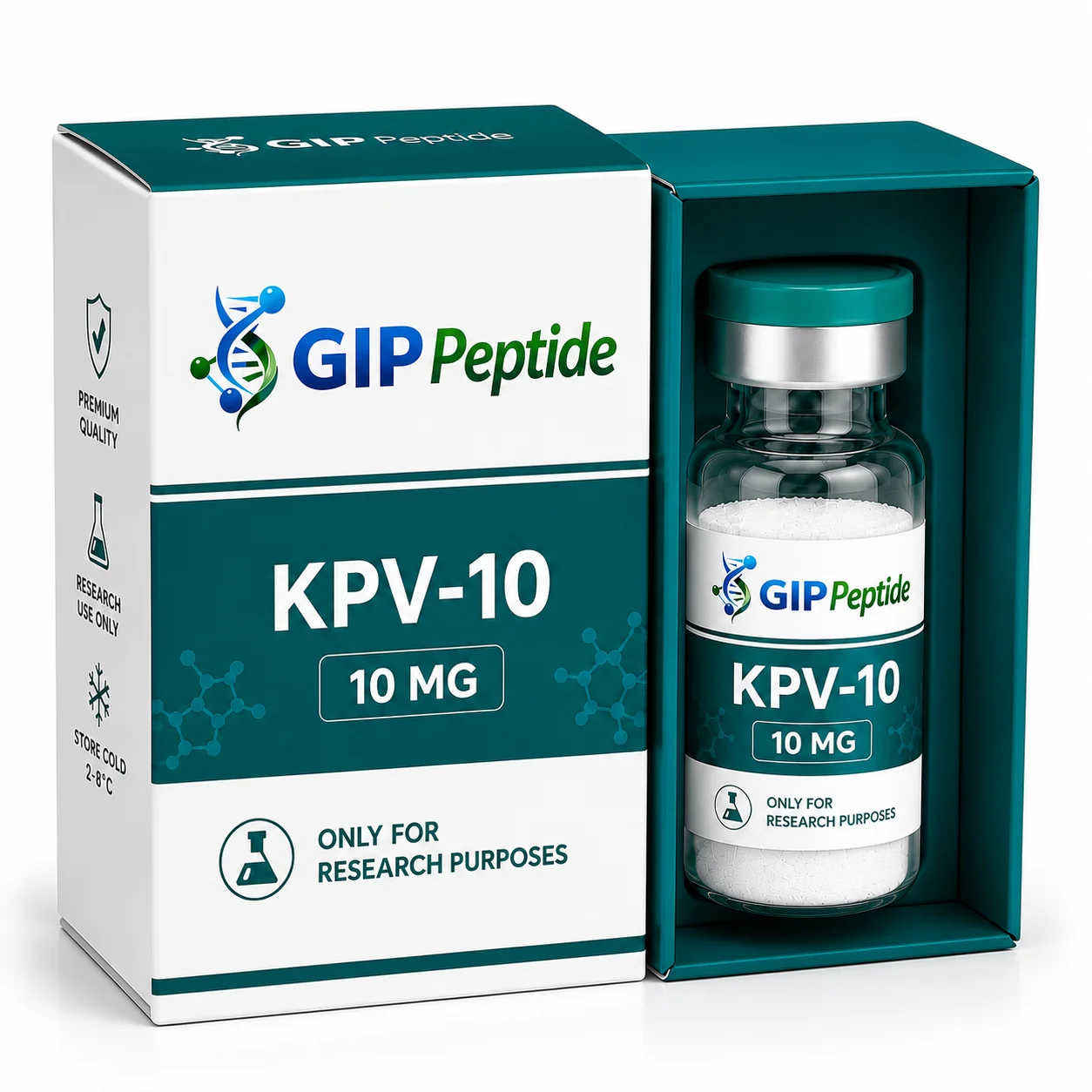
$60.00


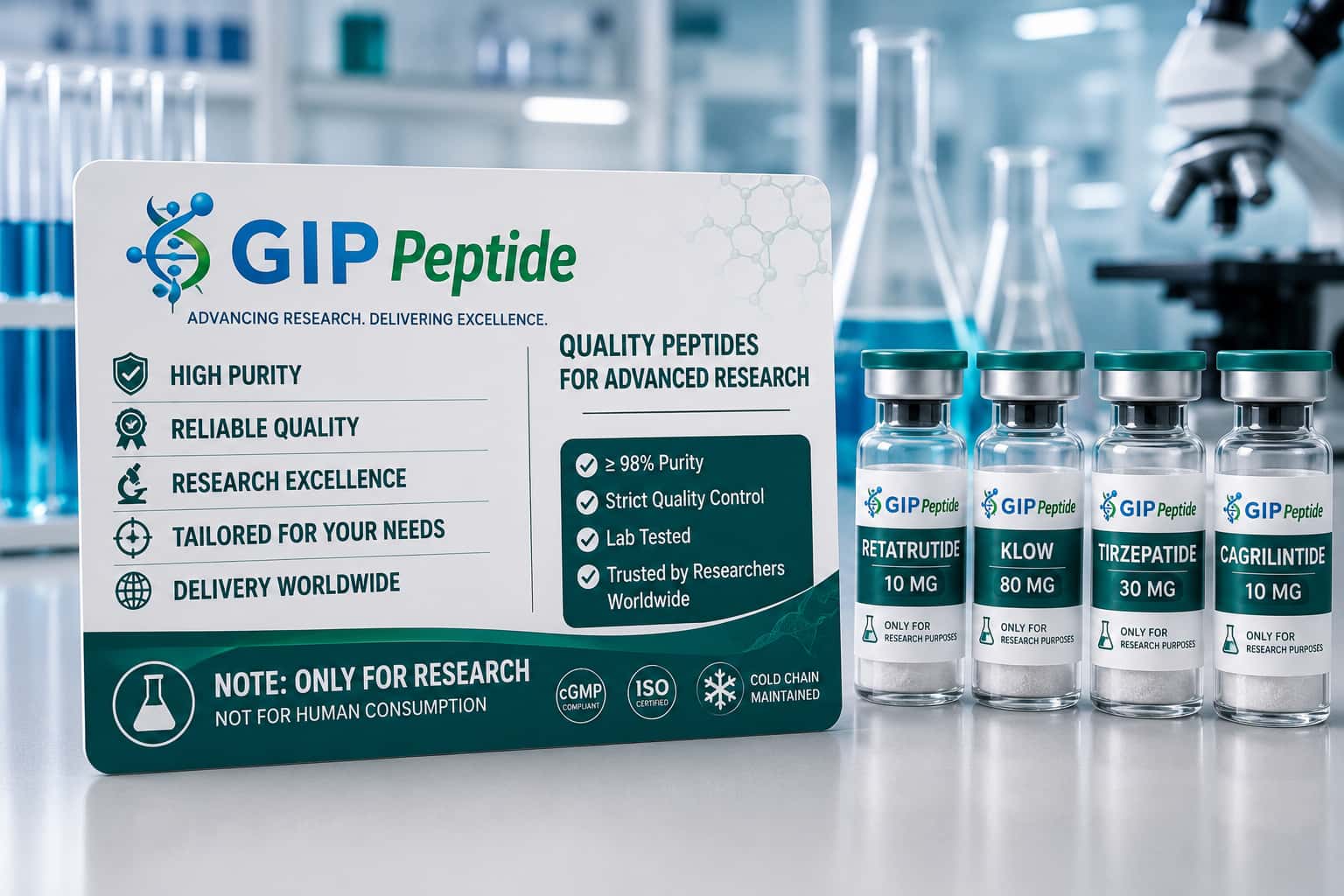
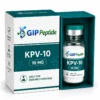
The KPV 10 mg peptide is a synthetic tripeptide supplied as a lyophilized powder for laboratory research. Derived from the C-terminal sequence of alpha-melanocyte-stimulating hormone (α-MSH), KPV has attracted scientific interest for its role in inflammatory pathways, immune signaling, and epithelial tissue biology.
The KPV 10 peptide is designed for researchers investigating peptide biology, inflammatory mechanisms, and cellular communication. The lyophilized formulation provides long-term stability when stored under appropriate laboratory conditions and can be reconstituted according to individual research protocols.
Current studies continue to examine how KPV interacts with biological pathways involved in immune regulation and tissue homeostasis.
Brand: GIP Peptide
Product Name: KPV 10 mg Peptide
Peptide Content: 10 mg
Appearance: White to off-white lyophilized powder
Purity: Laboratory grade
Container: Sterile glass research vial
Intended Use: Research use only
Storage Before Reconstitution: Refrigerate at 2°C–8°C
KPV has become a subject of scientific investigation because of its potential role in regulating inflammatory signaling pathways. Researchers continue to study its biological activity in controlled laboratory settings involving immune response, epithelial integrity, and cellular repair mechanisms.
Researchers may study KPV alongside other research peptides depending on the objectives of a project.
Common combinations include:
These combinations are selected according to individual research protocols and experimental design.
Current laboratory research involving KPV 10 mg peptide has explored areas including:
These applications remain the subject of ongoing scientific investigation and should not be interpreted as therapeutic uses.
Published studies involving KPV have examined topics such as:
Researchers continue to evaluate these biological mechanisms through controlled laboratory studies.
Reliable research depends on standardized laboratory procedures.
Researchers commonly:
Consistent methodology supports reproducible research outcomes.
The KPV 10 mg reconstitution process should follow established laboratory procedures.
Researchers commonly use bacteriostatic water or another suitable laboratory diluent when preparing lyophilized peptides.
General preparation guidance includes:
The volume of diluent depends on the concentration required for the specific laboratory protocol.
Proper preparation helps maintain peptide integrity throughout laboratory use.
Recommended practices include:
For consistent laboratory handling:
Store the unopened vial refrigerated between 2°C and 8°C.
Keep the vial protected from excessive moisture, heat, and direct light.
Store the prepared solution under refrigeration according to your laboratory protocol.
Proper storage helps maintain peptide stability during research.
The KPV 10 mg peptide is supplied exclusively for scientific research.
No dosage recommendations are provided because this product is not approved for human or veterinary use. Experimental concentrations should be determined by qualified researchers according to validated laboratory protocols.
No established safety profile exists for human use.
Information published in scientific literature relates primarily to laboratory and preclinical research models and should not be interpreted as evidence of safety or effectiveness in humans.
Researchers should follow standard laboratory safety procedures.
Recommended practices include:
The KPV 10 mg peptide is intended only for laboratory research.
It is not approved for diagnostic, therapeutic, or veterinary applications and should not be used outside controlled research environments.
Research evaluating interactions between KPV and other peptides remains ongoing.
When multiple compounds are included in a study, researchers should carefully document observations and follow validated experimental protocols to ensure accurate and reproducible results.
Each production batch should undergo quality control testing before release.
Testing may include:
Researchers should review the Certificate of Analysis (COA) for the specific batch before beginning laboratory work.
The KPV 10 mg peptide is supplied strictly for laboratory research purposes.
This product is not intended for human consumption, medical treatment, diagnosis, or veterinary use. Researchers are responsible for ensuring compliance with applicable regulations, institutional policies, and ethical research standards.
Anti-Aging & Longevity

All GIP PEPTIDE



Reviews
There are no reviews yet.